Naryn region done right: Koshoy-Korgon fortress, the At-Bashy valley, Tash-Rabat caravanserai and the road to Torugart. Seasons, logistics and how we plan it.
Our tours
See allNaryn is Kyrgyzstan at its most remote and least crowded. There are no lakeside resorts here, just broad valleys, horse herds grazing on summer pastures and long stretches of road where you may not see another car for an hour. The town of Naryn itself stretches along the river of the same name and makes a practical overnight stop before heading south toward the Chinese border. Many of our guests arrive after a trip to the alpine lake Son-Kul, and continuing south is far more rewarding than doubling back to Bishkek.
Beyond Naryn the road climbs into the At-Bashy valley, framed by the At-Bashy and Naryn-Too ranges. Near the village of Kara-Suu stand the eroded earthen walls of Koshoy-Korgon, a medieval fortified town that local tradition links to Koshoy, one of the elders of the Manas epic. A small museum displays finds from the excavations. It is not a site that impresses at first glance; it comes alive once your guide explains how this outpost watched over a branch of the Silk Road leading to Kashgar.
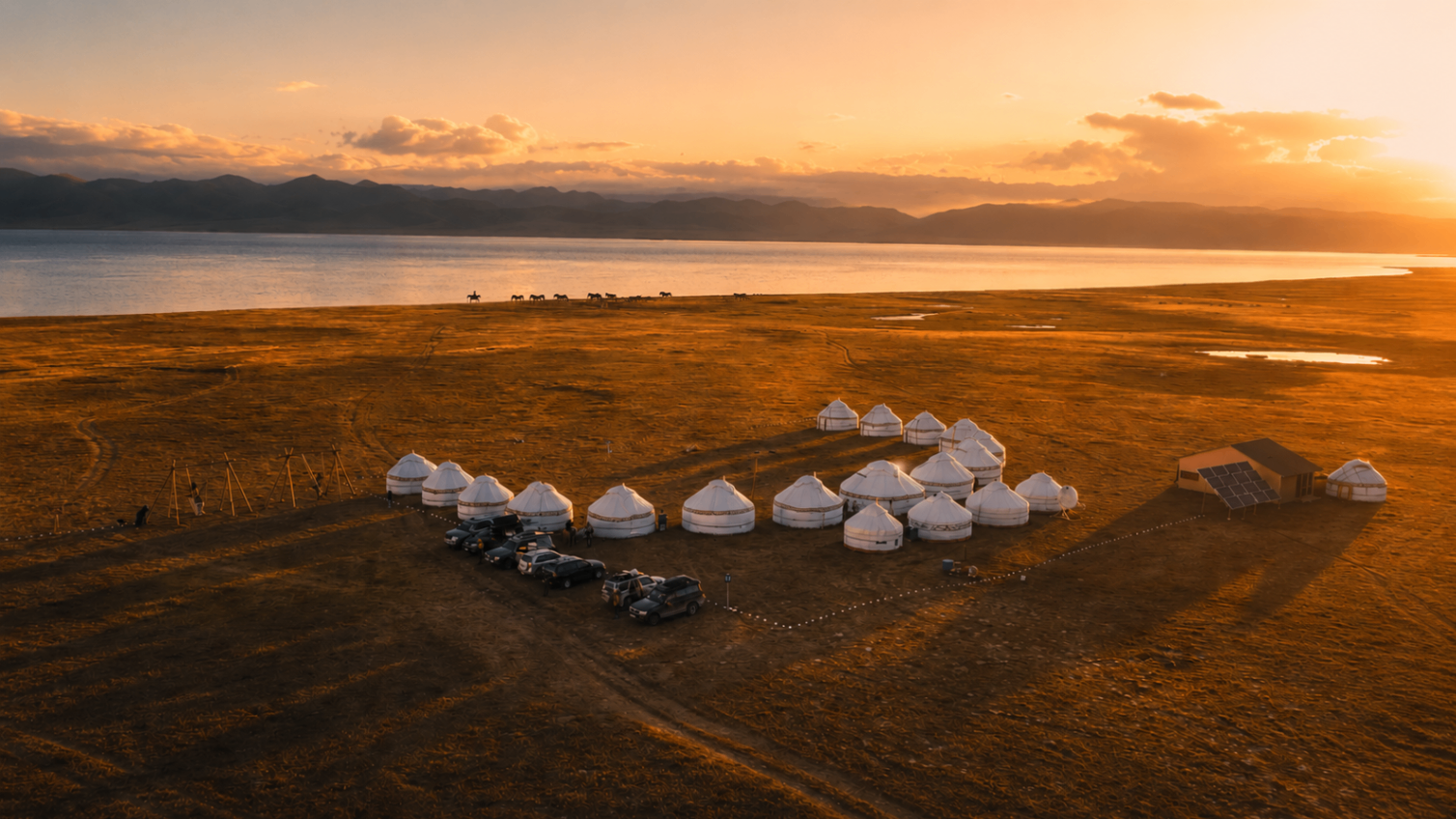
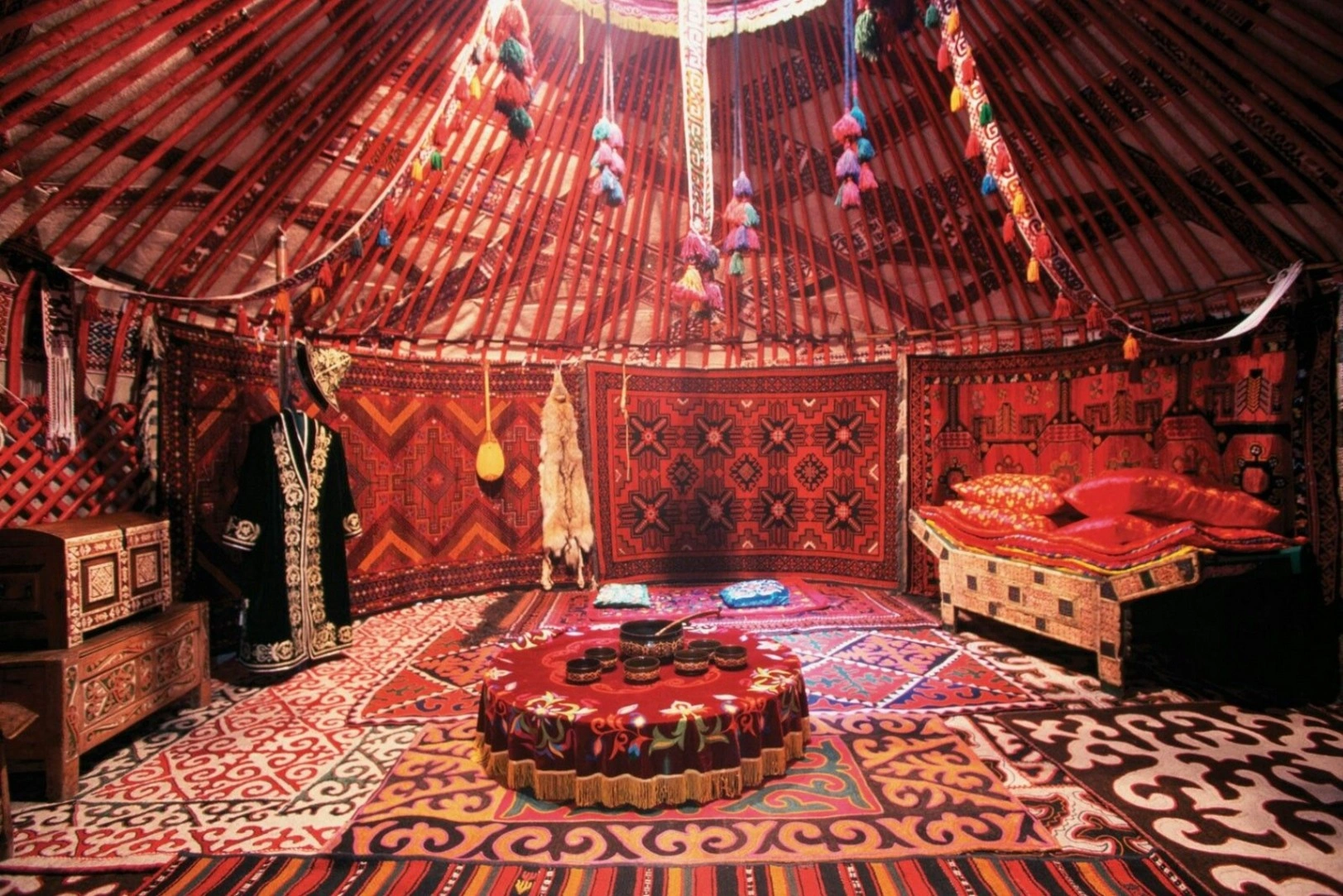
The highlight is Tash-Rabat, a stone caravanserai tucked into a side valley at over 3,000 metres. Historians still debate its age and original purpose, though most date it to the 15th century. Inside you find a domed central hall and dozens of small chambers where caravan traders once sheltered from the weather. Visit early in the morning, before anyone else arrives, and the place feels almost otherworldly. Yurt camps nearby make an overnight stay possible, and it is the best way to take in the setting.
Further on, the road reaches the Torugart pass on the Chinese border and the high-altitude lake Chatyr-Kul. This is a border zone: foreign visitors need a special permit arranged in advance, and crossing into China at Torugart requires a pre-booked transfer on the Chinese side. Even without crossing, the drive to Chatyr-Kul rewards you with rare panoramas and a real end-of-the-world feeling.
Naryn is for travellers who have already seen the Kyrgyz classics and want something less trodden: Silk Road history buffs, photographers, and anyone happy to trade long drives for real solitude. The best window is June to September, when yurt camps are open and the high passes are reliably clear. It pairs well with our Way of the Nomad itinerary or with a stop at the felt workshops of Kochkor, which we cover in our story on shyrdak carpets and Kyrgyz felt craft.
We are upfront about it: there are no international-standard hotels in the region. What we do is make the journey as comfortable as conditions allow — a 4x4 with an experienced driver, a guide with a background in history, the best vetted guesthouses in Naryn, private yurts at Tash-Rabat, hot meals and time built in for stops. Border-zone permits are handled well ahead of time. If remote high valleys appeal to you, read our piece on the Alay valley and Sary-Mogol, and get in touch with our team to shape a route for the 2026 season or next summer.
Want to see it with your own eyes?
We'll build a route around your dates, pace and budget — guide, transfers and stays included. We reply within a day.
Popular tours
You may also like