Uzgen near Osh: an 11th-century minaret, Karakhanid mausoleums with carved terracotta, devzira rice and a bazaar. Add it to a private route in the south.
Our tours
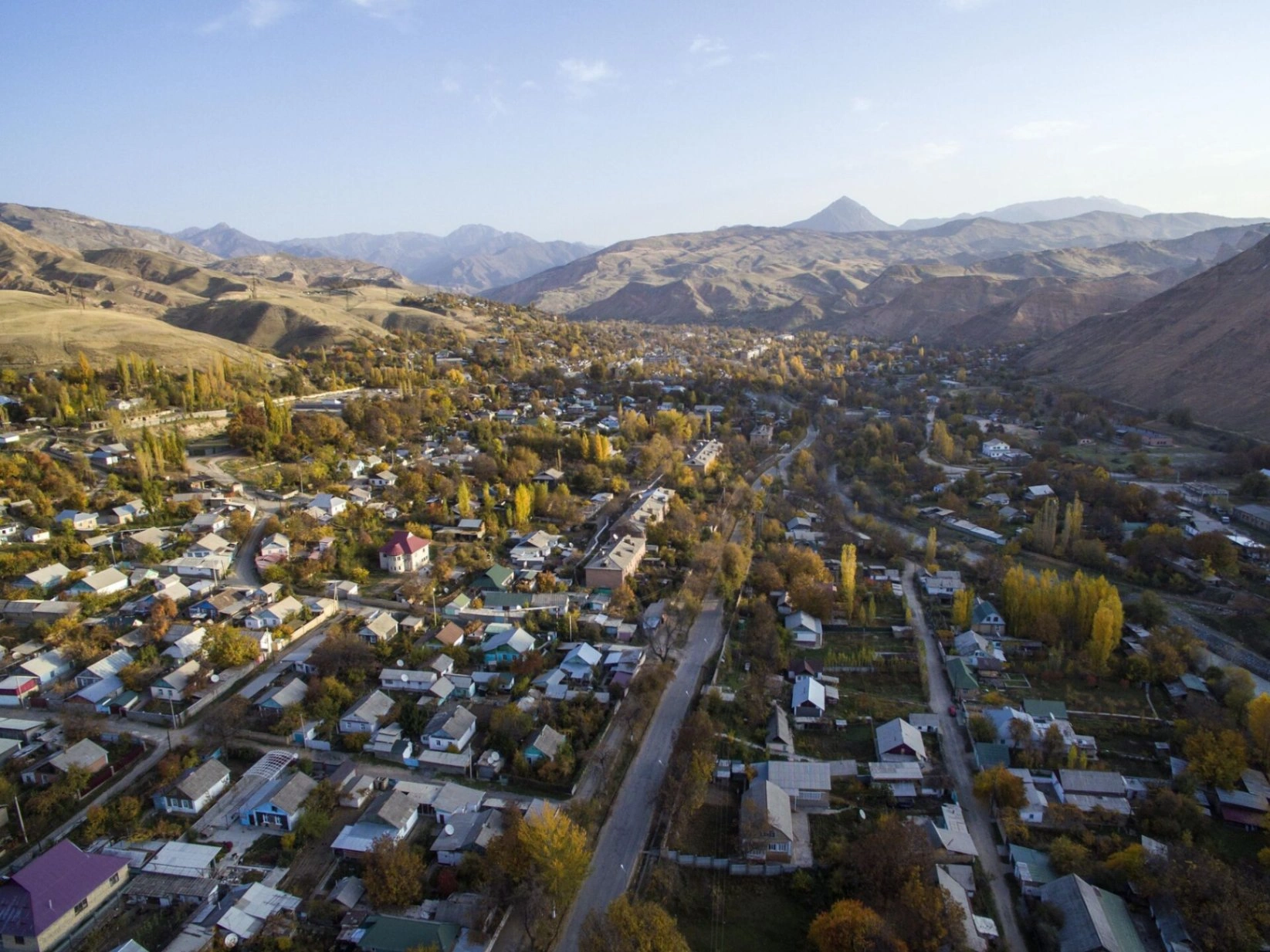
See allAn hour's drive northeast of Osh lies Uzgen, a quiet town on the rim of the Fergana Valley that once served as one of the capitals of the Karakhanid state. What survives from that era is an ensemble architectural historians mention in the same breath as Bukhara and Samarkand: a brick minaret and three rulers' mausoleums standing side by side. Few travelers make it here, which is exactly the appeal — you can stand inches from 11th- and 12th-century brickwork and take all the time you want.
You see it before you reach the town: a tapering shaft of fired brick, about 27 metres tall, wrapped in bands of geometric patterning. It dates to the 11th century; the lantern on top was rebuilt in the 20th century, while the lower section is original. Low morning light brings out the relief best, so we usually leave Osh early, while the valley is still cool.
Next to the minaret stand three mausoleums from different periods. The middle one is the oldest, associated with Karakhanid rulers around the turn of the 11th century. The northern mausoleum is dated 1152 and the southern one 1186. The real stars are the portals: carved terracotta and ganch plaster form dense floral and geometric designs, with Arabic inscriptions woven into the ornament. Compare the three and you can trace 150 years of changing taste, from crisp, graphic patterns to something closer to lace.
Uzgen is even more rewarding if you have seen its northern counterpart. Travelers who have visited the Burana Tower in the Chuy Valley get a vivid sense of just how far the Karakhanid world stretched.
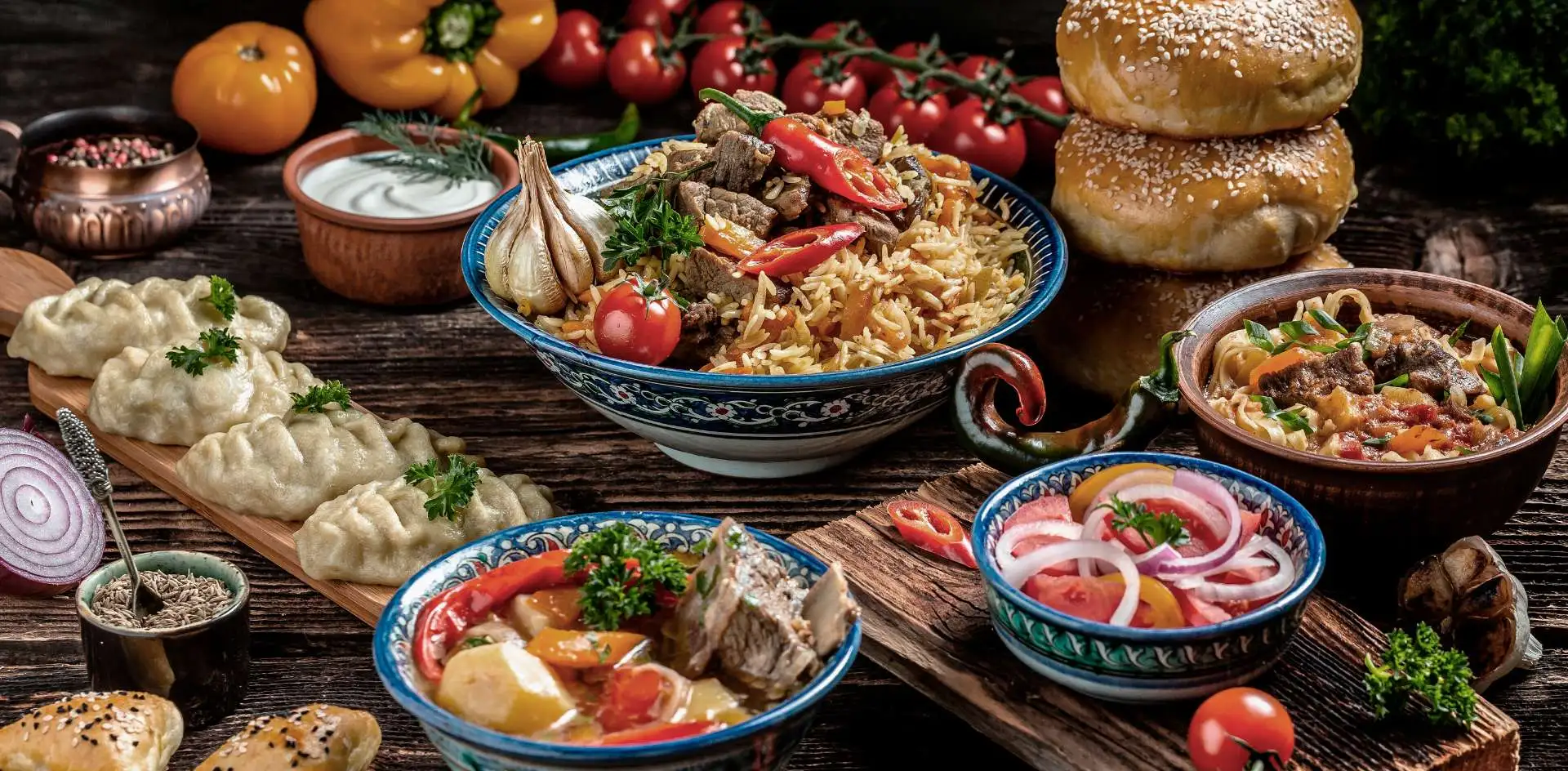
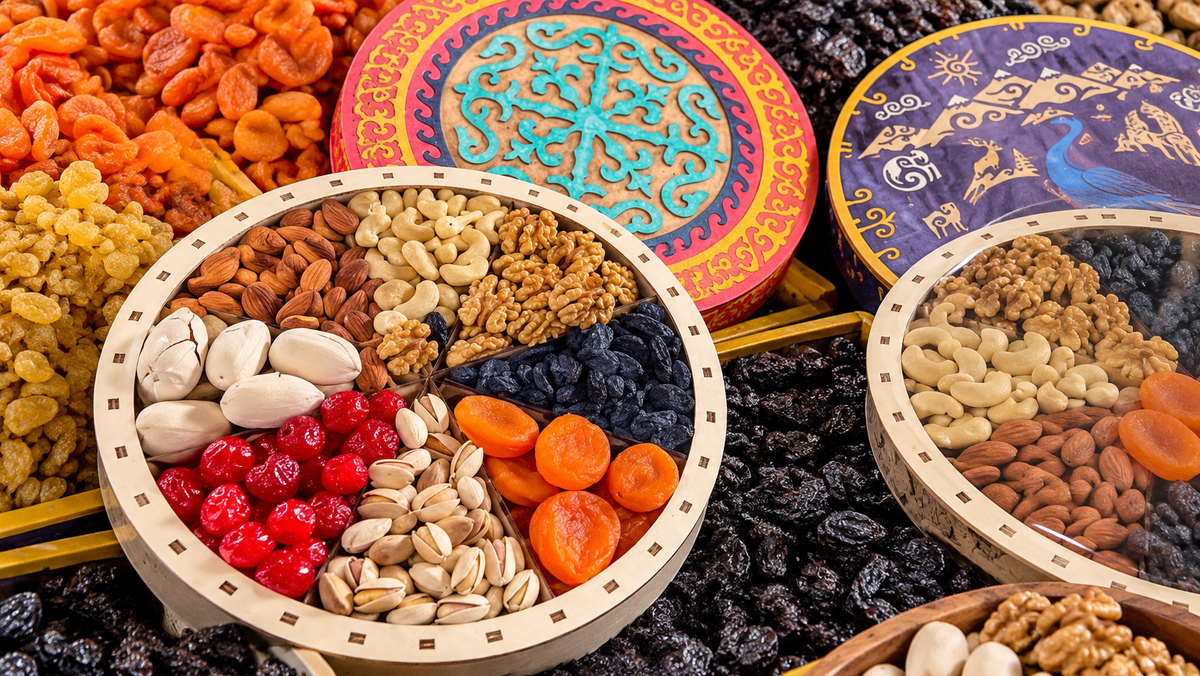
Uzgen's other claim to fame is on the plate. Along the Kara-Darya river, farmers grow devzira, a pinkish heirloom rice prized across the Fergana Valley because it holds its shape and soaks up fat and juices without turning mushy. At the town bazaar it's sold by the sack, next to cumin, dried barberries and chili. A walk through the stalls with a local guide is the easiest way to tell genuine devzira from look-alikes — and to pick up a small bag to take home.
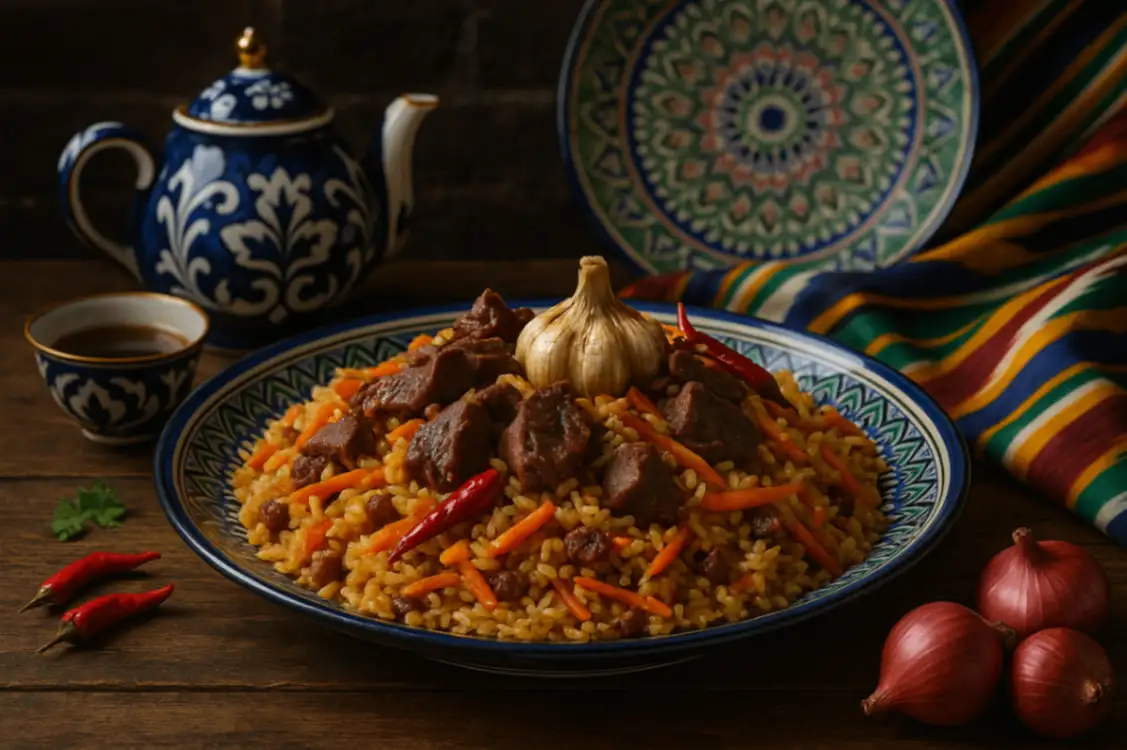
The natural next step is plov. We can arrange lunch in a private home where the host cooks it in a cauldron over an open fire, using the same rice, and you follow the whole process from the first carrots to the moment the lid comes off.
Uzgen works well as a half-day or full-day excursion from Osh: the monuments in the morning, the bazaar and lunch afterwards, back in the city by evening. Pair it with Sulaiman-Too, Osh's sacred mountain, and two days in the south give you a complete story, from ancient shrines to medieval Islamic architecture. April to June and September to October are ideal; summer in the valley is hot.
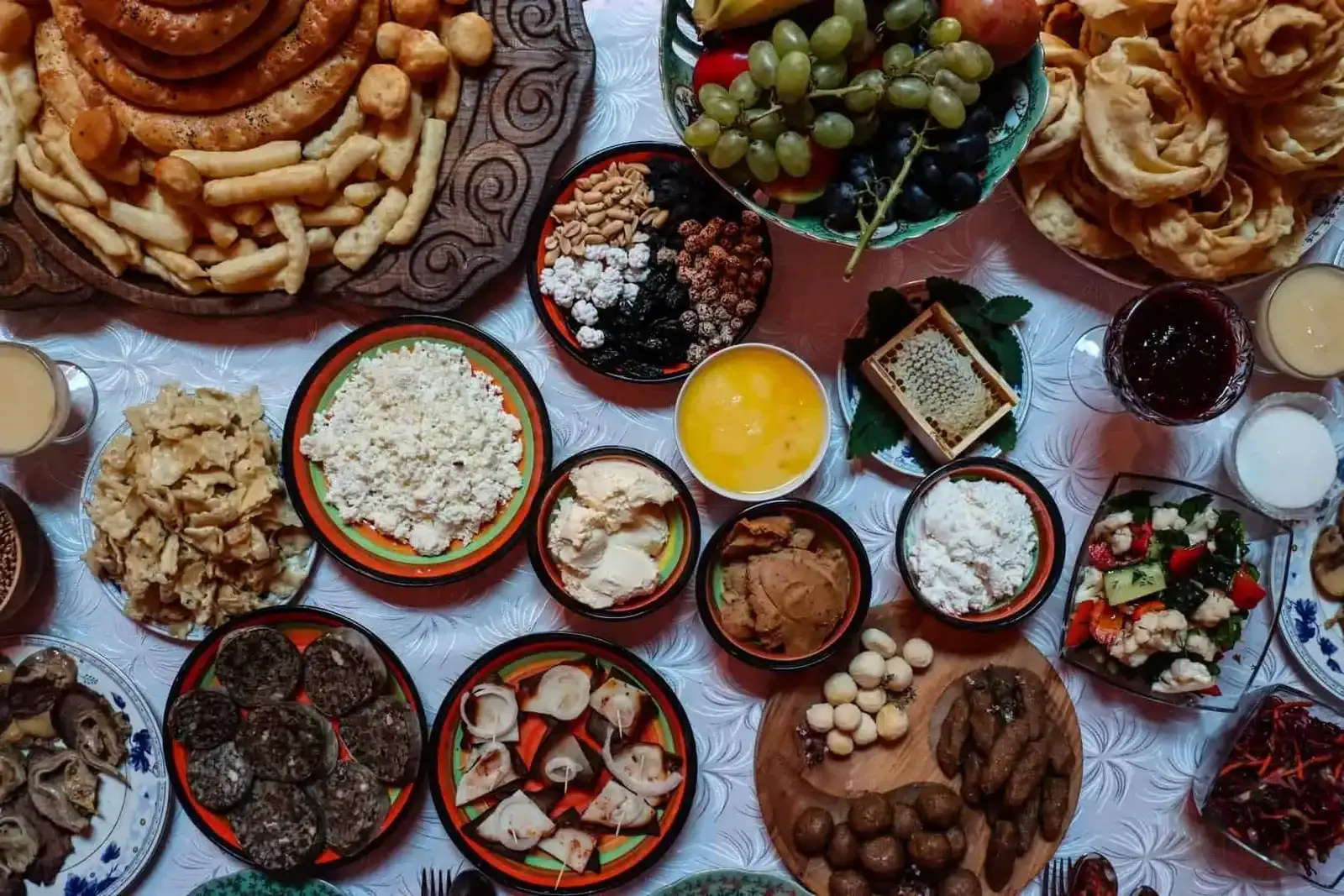
We plan these days privately: a comfortable vehicle, a historian guide, lunch with a local family and your own pace. To set dates and connect Uzgen with the rest of your Kyrgyzstan itinerary, get in touch with our team.
Want to see it with your own eyes?
We'll build a route around your dates, pace and budget — guide, transfers and stays included. We reply within a day.
Popular tours
You may also like