What Kyrgyz kurosh is, how this belt wrestling differs from other styles, and where to watch it live: village feasts, Nooruz, the Nomad Games or a private bout.
Our tours
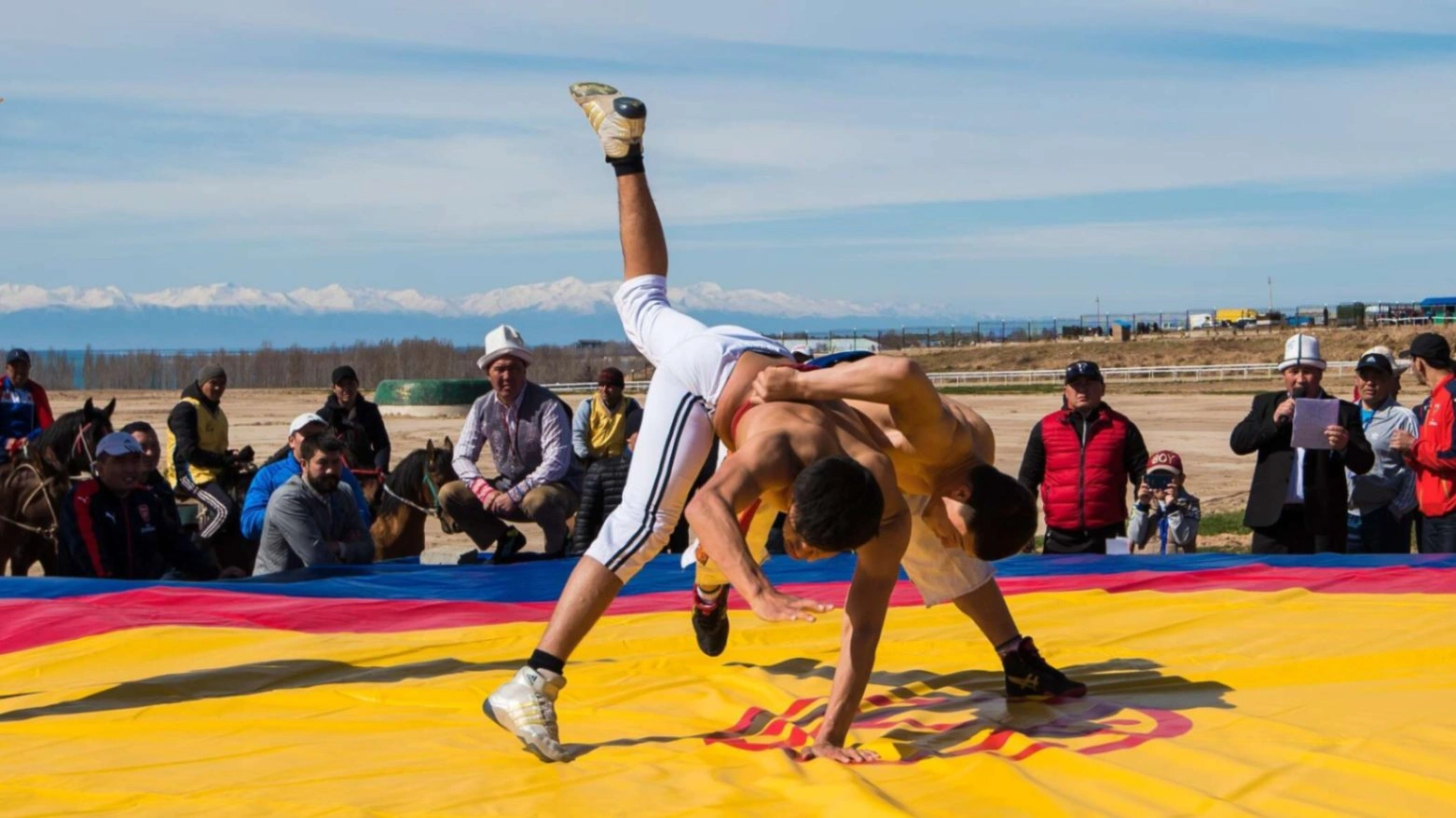
See allAt every big Kyrgyz celebration there comes a moment when the tea bowls go down and the crowd forms a ring. Two men in sashes step into the middle of the meadow, the elders call out every move, and children squeeze into the front row. This is Kyrgyz kurosh, a belt wrestling tradition as old as nomadic life itself, and watching it live tells you more about the country's character than any museum.
The name gives it away: kur means belt. Wrestlers wear loose shirts tied with a wide sash, and every move starts with a grip on that sash. The fight stays on its feet. There is no ground work, no chokes and no joint locks. The goal is to break your opponent's balance and put him flat on his back. A clean throw ends the bout outright, while modern tournaments add weight classes and points for less decisive throws.
That simplicity is exactly why kurosh is so watchable. Freestyle or Greco-Roman bouts often sink into mat work that only insiders can follow. Here every exchange reads instantly: grip, pull, trip, flight. Raw strength matters, but so does patience. A seasoned palvan will circle with his rival for a long time, then settle it in a single motion.

For centuries kurosh belonged to festivities, not to sports halls. Men wrestled at weddings, memorial feasts and Nooruz, and the winner took a prize from the host, anything from a carpet or a robe to a horse. A strong wrestler brought honour to his whole clan, which is why every bout comes with a village of supporters.
The World Nomad Games took kurosh international, bringing in wrestlers from Central Asia, Türkiye, Mongolia and other places where related belt styles survive. The sixth edition returned to Kyrgyzstan in 2026, and the wrestling arena drew crowds to rival the famous horseback game of kok-boru. If you are thinking about the next Games, our World Nomad Games tour is where we keep schedules and access options up to date.
The best part of kurosh happens around the ring, so we usually build it into a full cultural day: a morning with an eagle hunter, lunch at a laden dastarkhan, wrestling at sunset and an unhurried conversation with the palvans about training and family tradition. Your guide explains each technique and why the crowd suddenly erupts. Guests who are curious can try a belt grip under the wrestlers' supervision, which quickly shows why back and grip strength earn so much respect here.

An evening like this pairs naturally with our Way of the Nomad itinerary, or with a game of toguz korgool in a yurt: strength and strategy on the same day. To catch kurosh at a real celebration or arrange a private bout for your family or company, get in touch with our team and we will match the dates, venue and programme to your group.
Want to see it with your own eyes?
We'll build a route around your dates, pace and budget — guide, transfers and stays included. We reply within a day.
Popular tours
You may also like