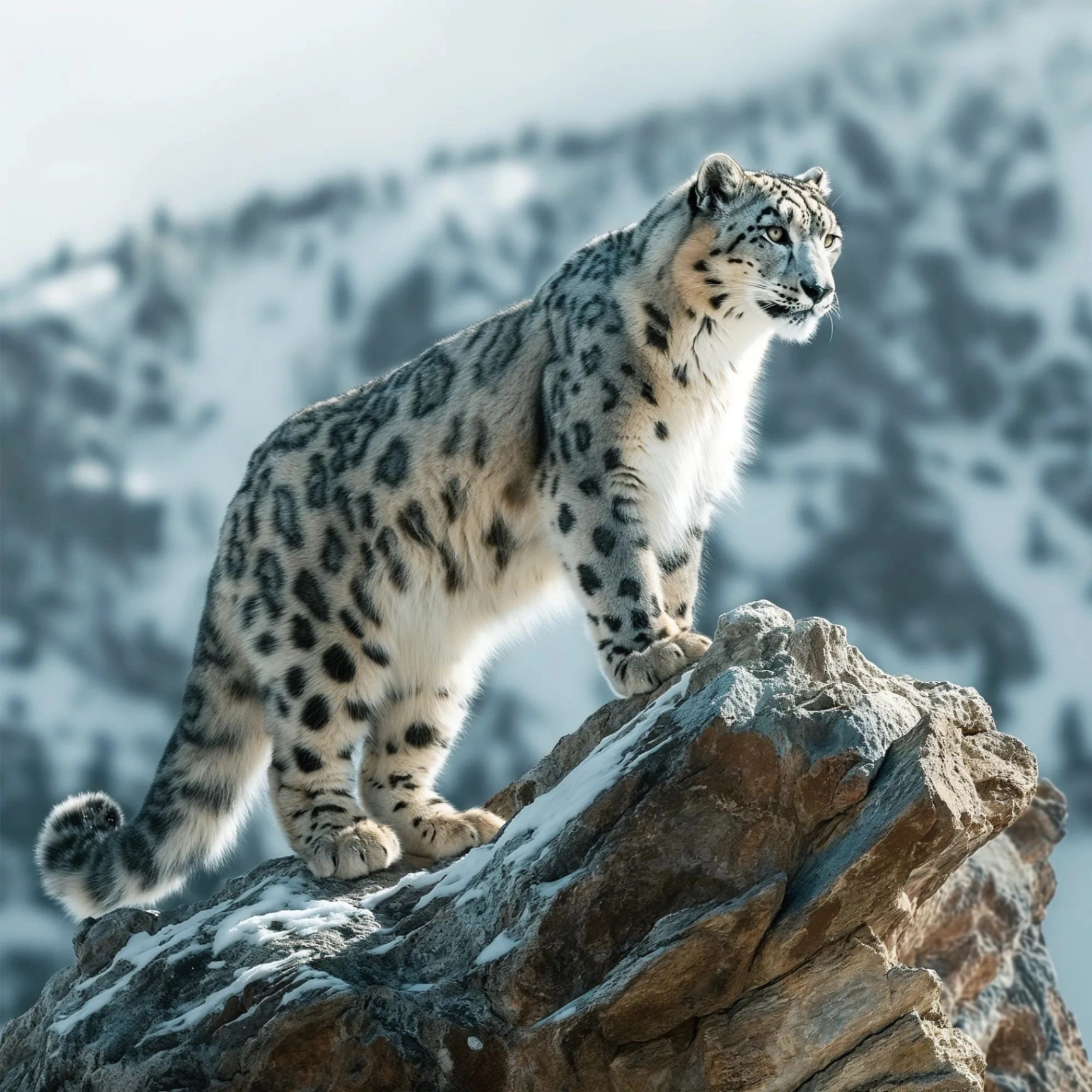
Cholpon-Ata petroglyphs on Issyk-Kul: Bronze Age and Saka rock art, ibex and snow leopards, best light for photos and a private visit with a historian.
Our tours
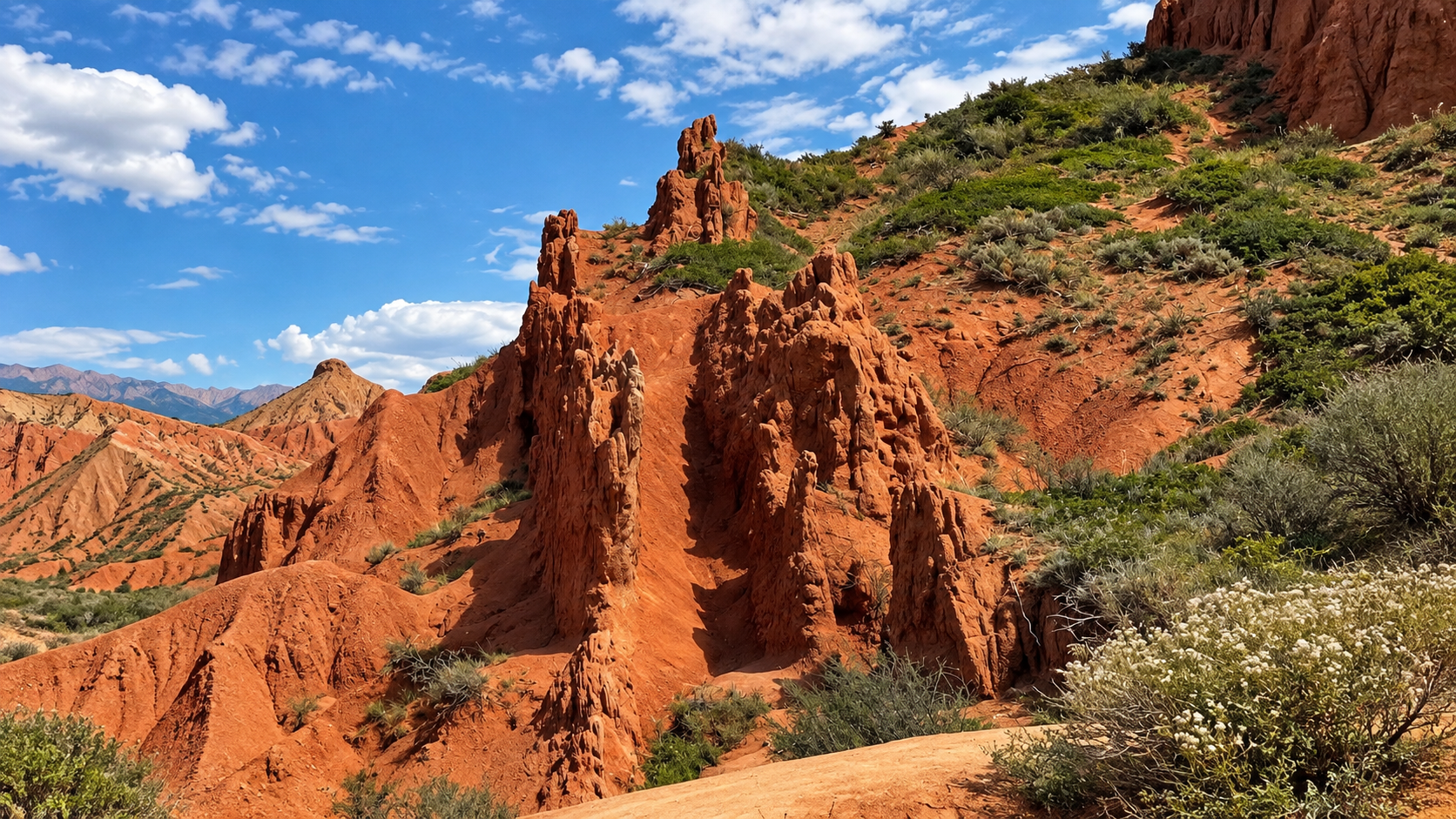
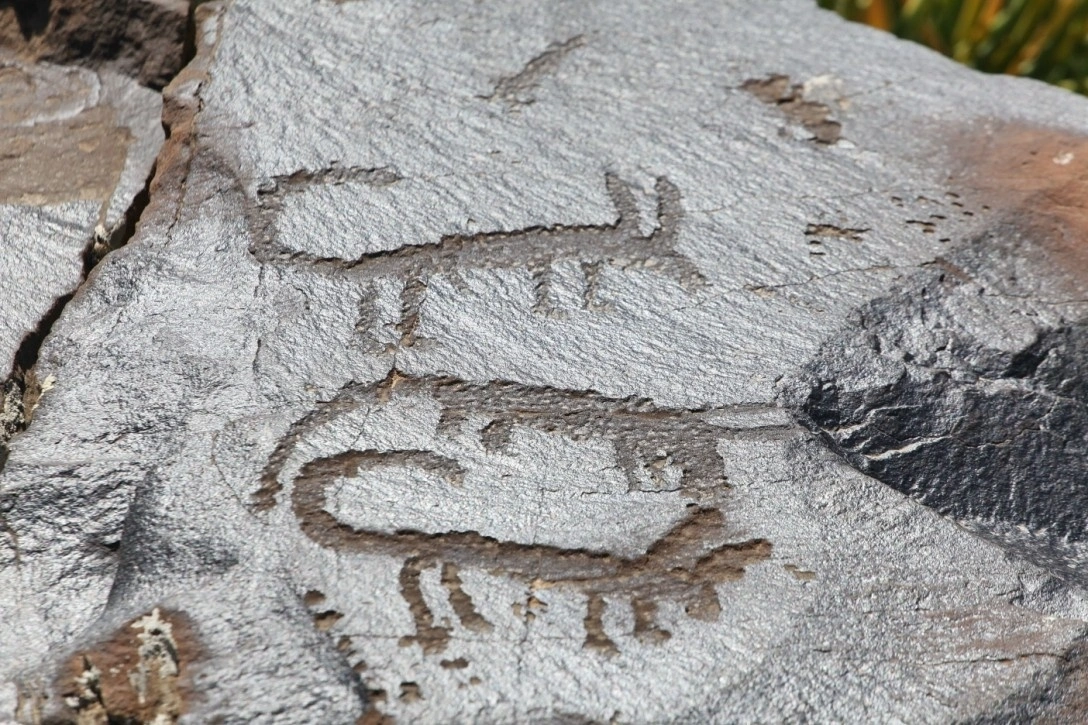
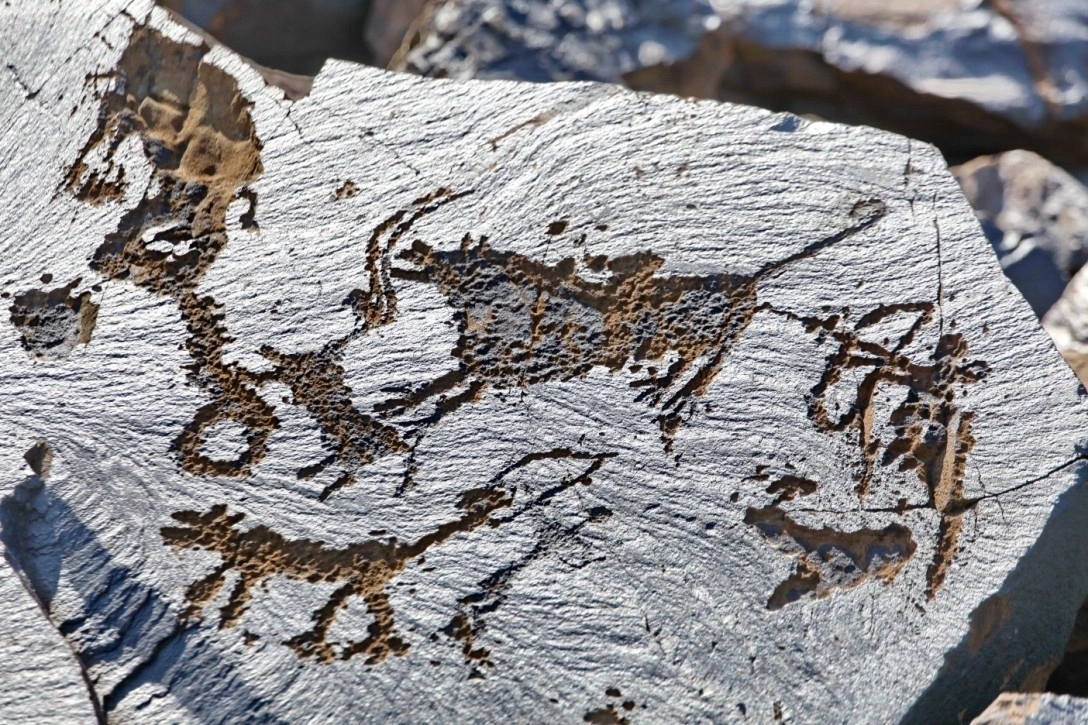
See allAbove Cholpon-Ata, where the resort town gives way to the rocky foothills of the Kungey Ala-Too, lies a field of boulders that could pass for an ordinary glacial moraine. Walk closer, though, and figures emerge from the dark, varnish-like surface of the stones: ibex with sweeping curved horns, deer, riders, snow leopards. This is one of Central Asia's largest open-air petroglyph sites — and arguably the most underrated stop on Issyk-Kul's north shore.
Archaeologists date the earliest images to the Bronze Age, around the turn of the 2nd and 1st millennia BC. The richest layer belongs to the Saka and Wusun period: the Saka, Iranian-speaking nomads, left their unmistakable "animal style" deer and mountain goats here. Later carvings and tamga clan signs were added in the early Turkic era. In practice, one hillside holds nearly three thousand years of steppe visual history.
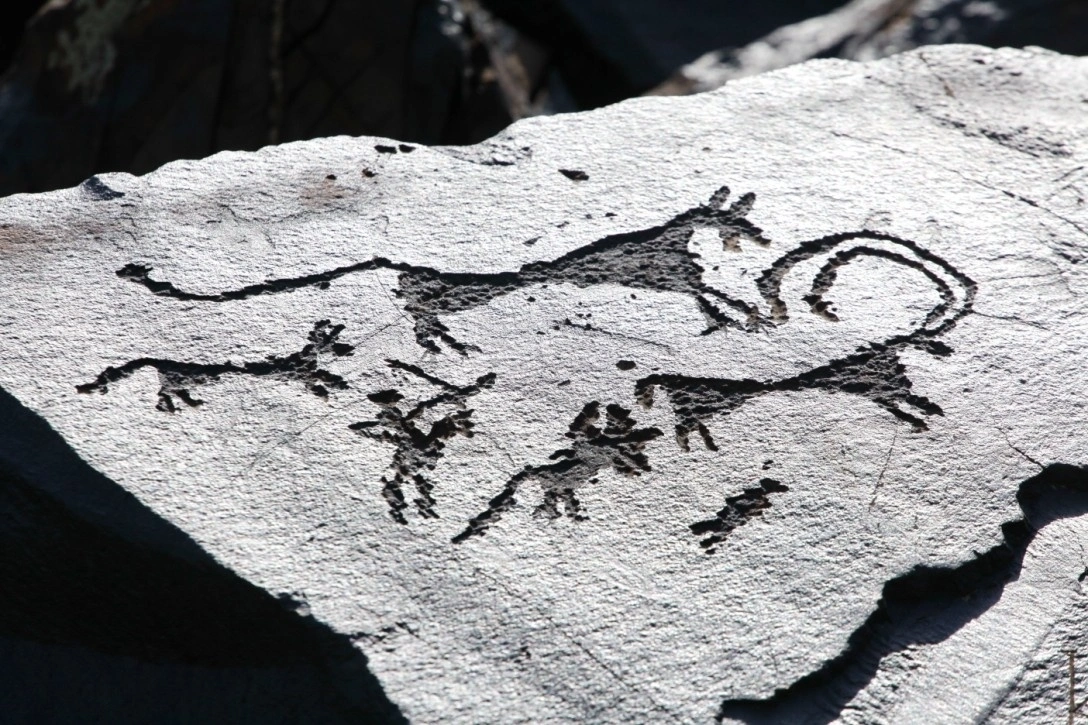
The images were pecked rather than painted. Ancient artists chipped away the dark desert patina with stone or metal tools, exposing the lighter rock beneath. That is why the petroglyphs look so different over the course of a day: everything depends on the angle of the sun.
Keep an eye out for the stone circles within the site, linked to ritual practice in the valley. If you have already seen the Burana Tower and the balbal stone figures of the Chuy Valley, it is fascinating to trace how imagery evolved from Saka deer to Turkic stone statues.
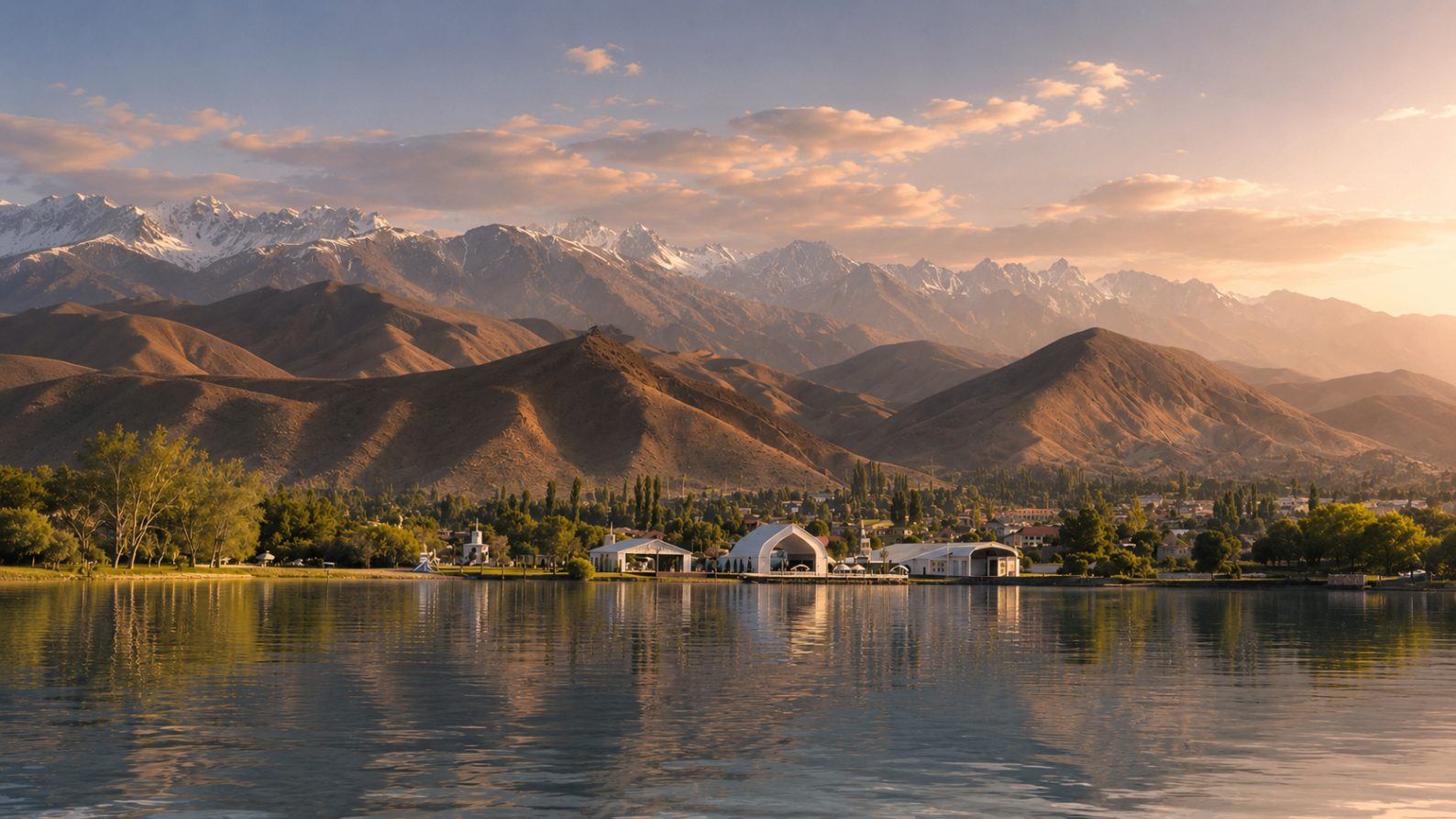
The site is accessible from spring to late autumn, but photographers should pick the hour rather than the season. At midday the carvings flatten out almost completely. In the early morning and the last couple of hours before sunset, raking light picks out every groove, while the lake and the snowy Terskey range on the far shore fill the background. Late September and October are the sweet spot: soft light, crisp air and hardly anyone around. Wear proper shoes — paths cross stony slopes and the site is larger than it looks.
Wandering the boulders alone is easy; understanding them is not. Signage is sparse, and the best compositions are often off the main path. On xtravel itineraries, the visit is led by a specialist historian: we time it for the morning or evening light, avoid the groups, go straight to the stones worth seeing and explain how to tell Saka work from Bronze Age carvings or read a tamga. Afterwards, dinner overlooking the lake — or a transfer to the quieter side of Issyk-Kul, with Skazka Canyon and the south shore.
The petroglyphs also make a gentle day before something more active, such as the trek to Ala-Kul Lake. Browse our curated travel collections for Issyk-Kul ideas, or get in touch and we will suggest dates, a historian and the right place to stay.
Want to see it with your own eyes?
We'll build a route around your dates, pace and budget — guide, transfers and stays included. We reply within a day.
Popular tours
You may also like