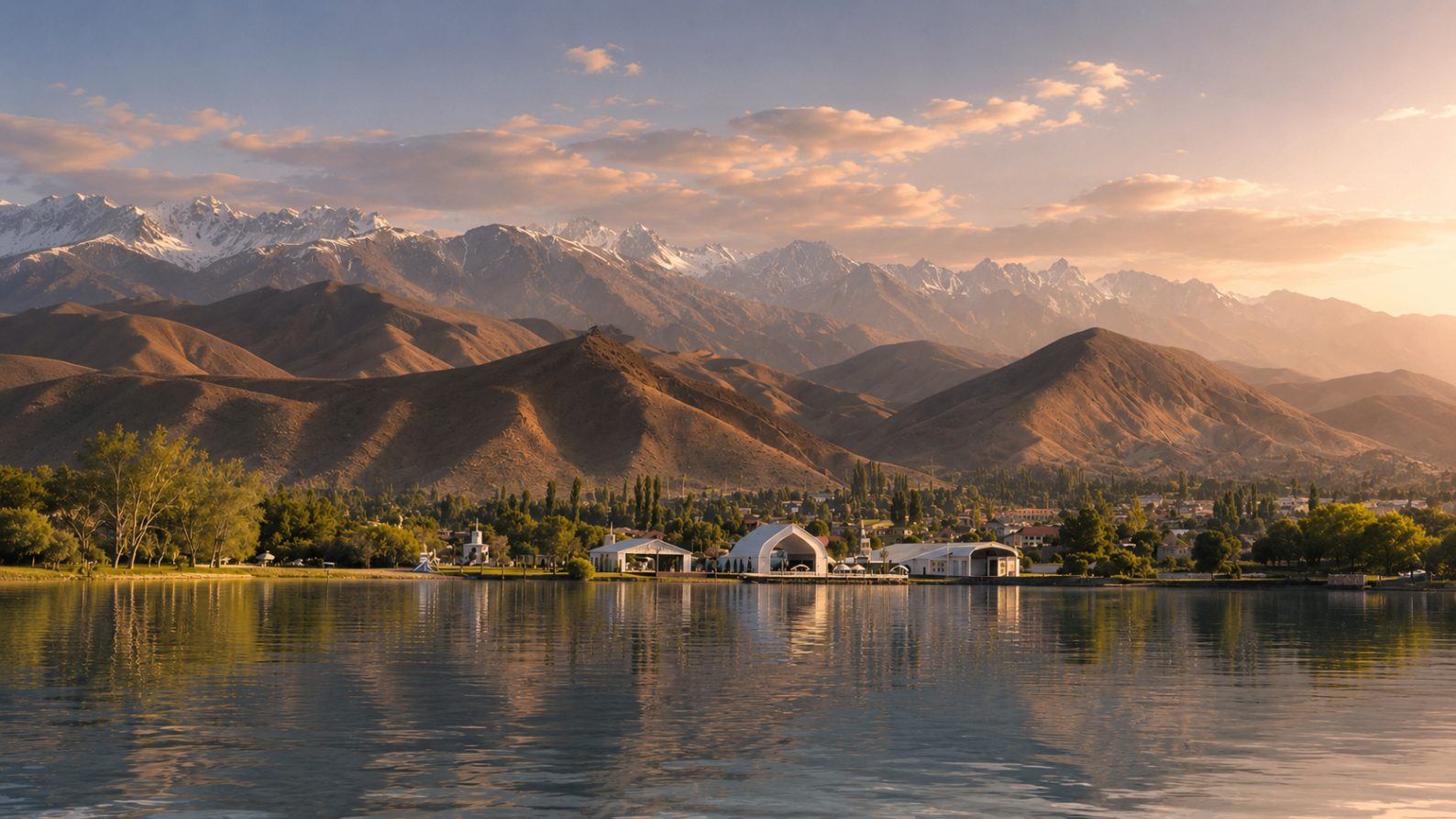
How a Kyrgyz yurt works – tunduk, kerege, the place of honour, felt shyrdaks – and where to sleep in one comfortably at Son-Kul and Issyk-Kul.
Our tours
See allKyrgyz call the yurt boz üy, the "grey house", after the colour of its felt. To visitors it is an exotic place to spend a night; to a Kyrgyz family it is a whole worldview that can be raised in a couple of hours and packed onto horses even faster. Once you know what each element means, dinner in a yurt stops being a photo opportunity and becomes a conversation with a culture built for movement.
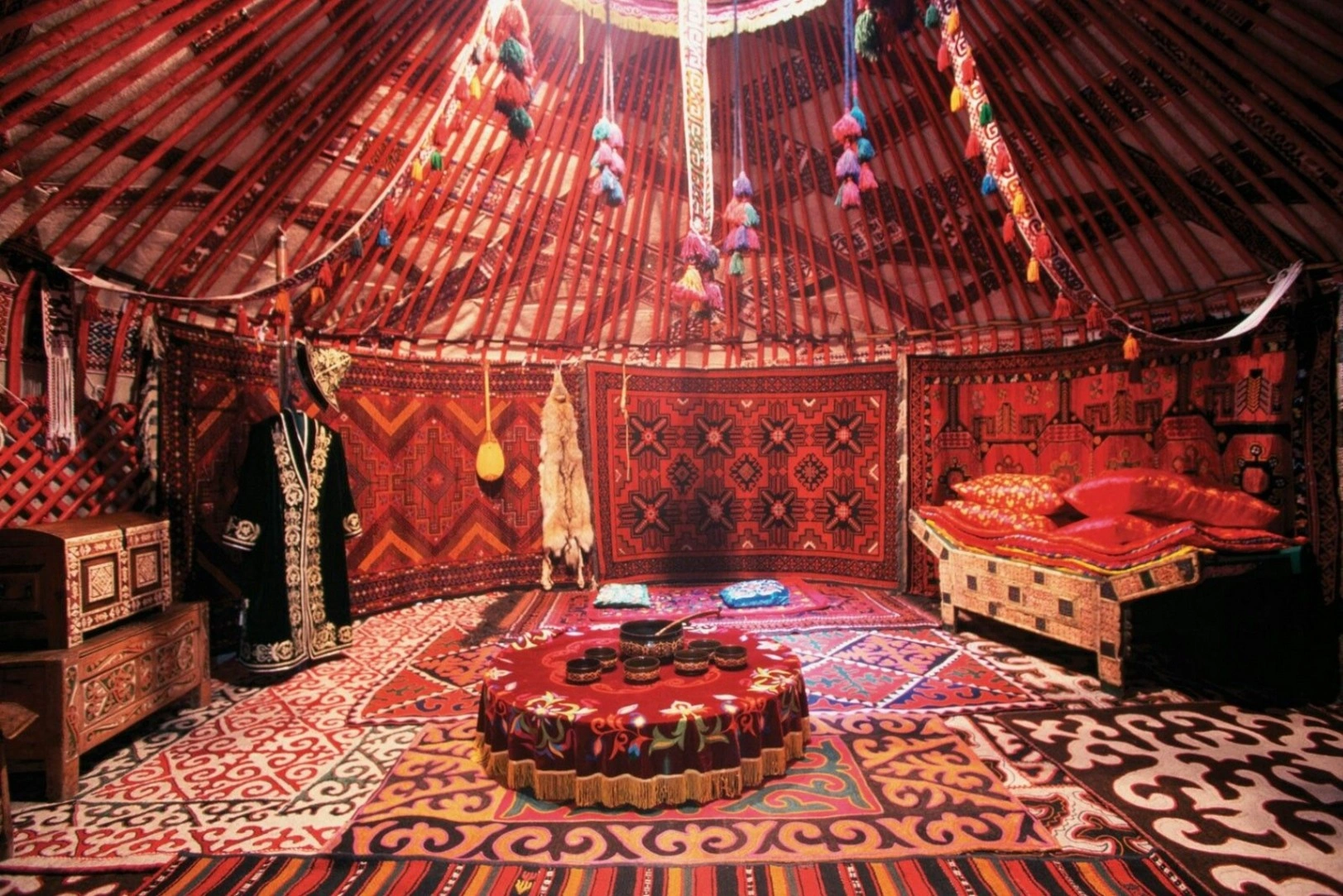
The walls are made of kerege, expandable wooden lattices set in a circle. Curved roof poles called uuk rest on them and meet at the tunduk, the wooden crown at the top of the dome. Smoke leaves and light enters through it, and nomads once read the time of day from the patch of sun moving across the floor. A family's tunduk was handed down through generations as the symbol of home and lineage – which is why it sits at the centre of Kyrgyzstan's national flag.
Layers of felt are wrapped around the frame and tied down with woven bands. The result holds warmth through a cold night at 3,000 metres and stays cool by day, which is why shepherds still live in yurts on their summer pastures. This is working architecture, not a museum piece.
Every spot inside has a meaning. Opposite the door is the tör, the place of honour reserved for elders and important guests. Behind it stands the jük, a neat stack of quilts and cushions on chests that quietly displays the family's prosperity. The space is split into a men's side, where saddles, tack and hunting gear were kept, and a women's side for cooking and provisions. For guests this translates into a few easy courtesies: don't step on the threshold, wait to be seated, and accept your bowl of tea with the right hand. Hosts notice, and they appreciate it.
Floors are covered with shyrdaks, mosaic felt rugs, while the walls carry tush kiyiz, large embroidered hangings that a bride traditionally made for her dowry. The patterns carry meaning: ram's horns stand for strength and plenty, waves and plant motifs for water and fertility. If you'd like to try the craft yourself, read our story on private felt-making workshops in Kochkor.

Authentic and comfortable are not mutually exclusive – it all comes down to the camp. At Son-Kul we use camps with proper beds and good linen, a wood stove that staff keep going through the night, and separate heated bathrooms with showers. The high-altitude season there is short, roughly June to mid-September, so summer 2027 is worth reserving now. Around Issyk-Kul, yurts stand by the water or at the mouths of gorges, a good option for families or anyone who prefers to stay lower. And on remote jailoo pastures we can set up a private camp just for your party, complete with a cook, a generator and a view you share with no one.
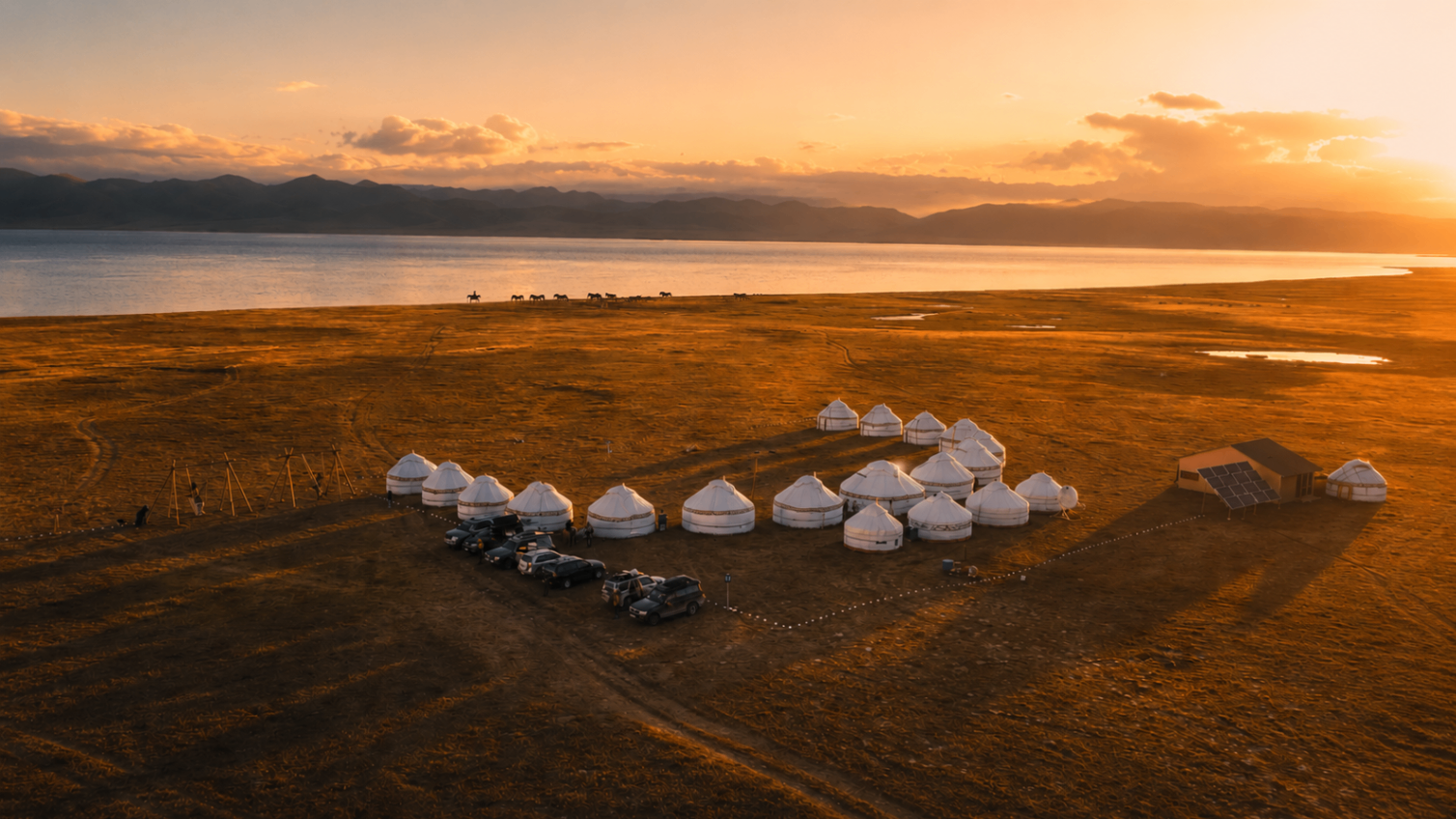
We choose camps on three things: our team has stayed there, it is clean and warm at night, and the hosts genuinely enjoy guests. The evening tends to unfold naturally – a dastarkhan spread with beshbarmak and kymyz (more in our food journey through northern Kyrgyzstan), followed perhaps by komuz players and a manaschi, as described in our piece on an evening of nomadic music. Browse our curated collections for itineraries that include yurt nights, or get in touch and we'll tailor one to your dates and group.
Want to see it with your own eyes?
We'll build a route around your dates, pace and budget — guide, transfers and stays included. We reply within a day.
Popular tours
You may also like