How to add Khiva and Bukhara to a private Kyrgyzstan trip: Itchan Kala, old Bukhara, crafts, food and smooth logistics for 2027, planned by xtravel.
Our tours
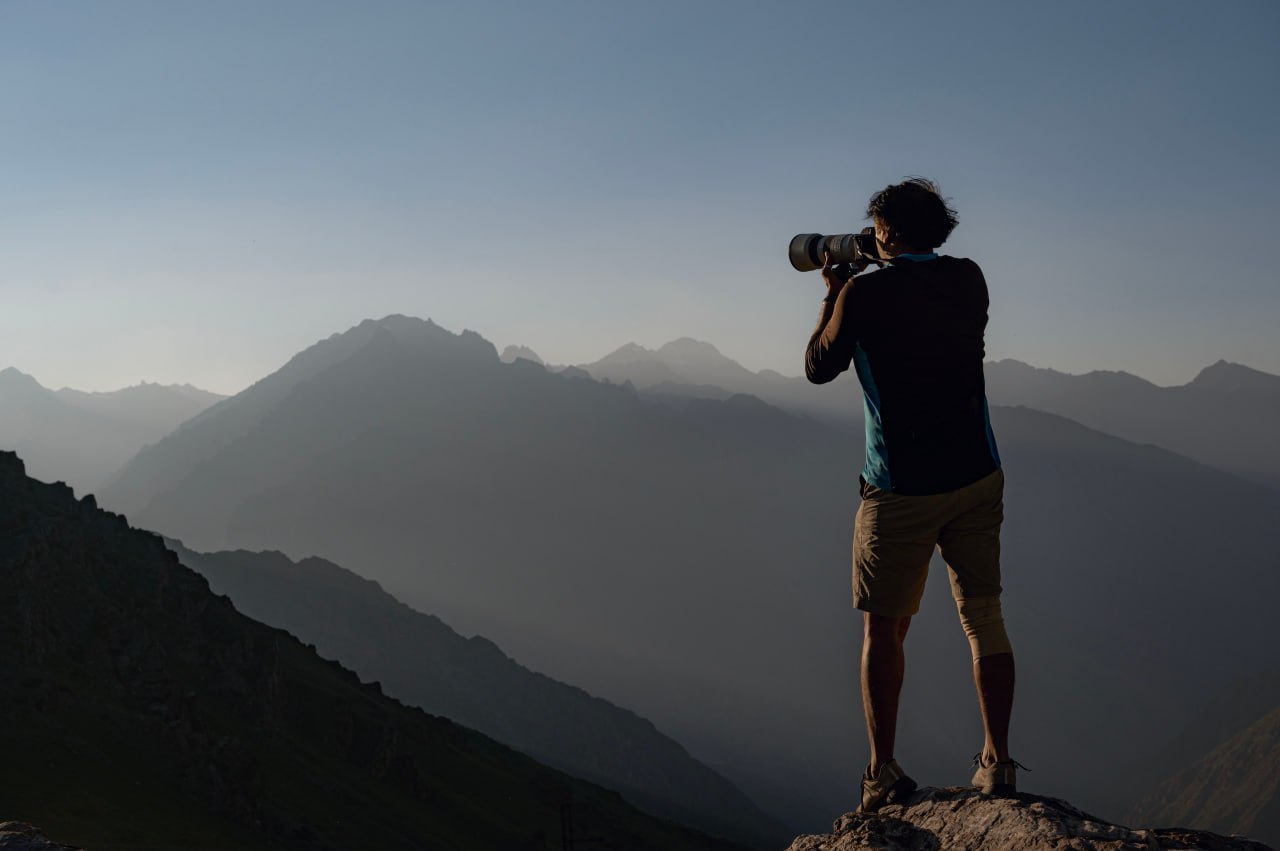
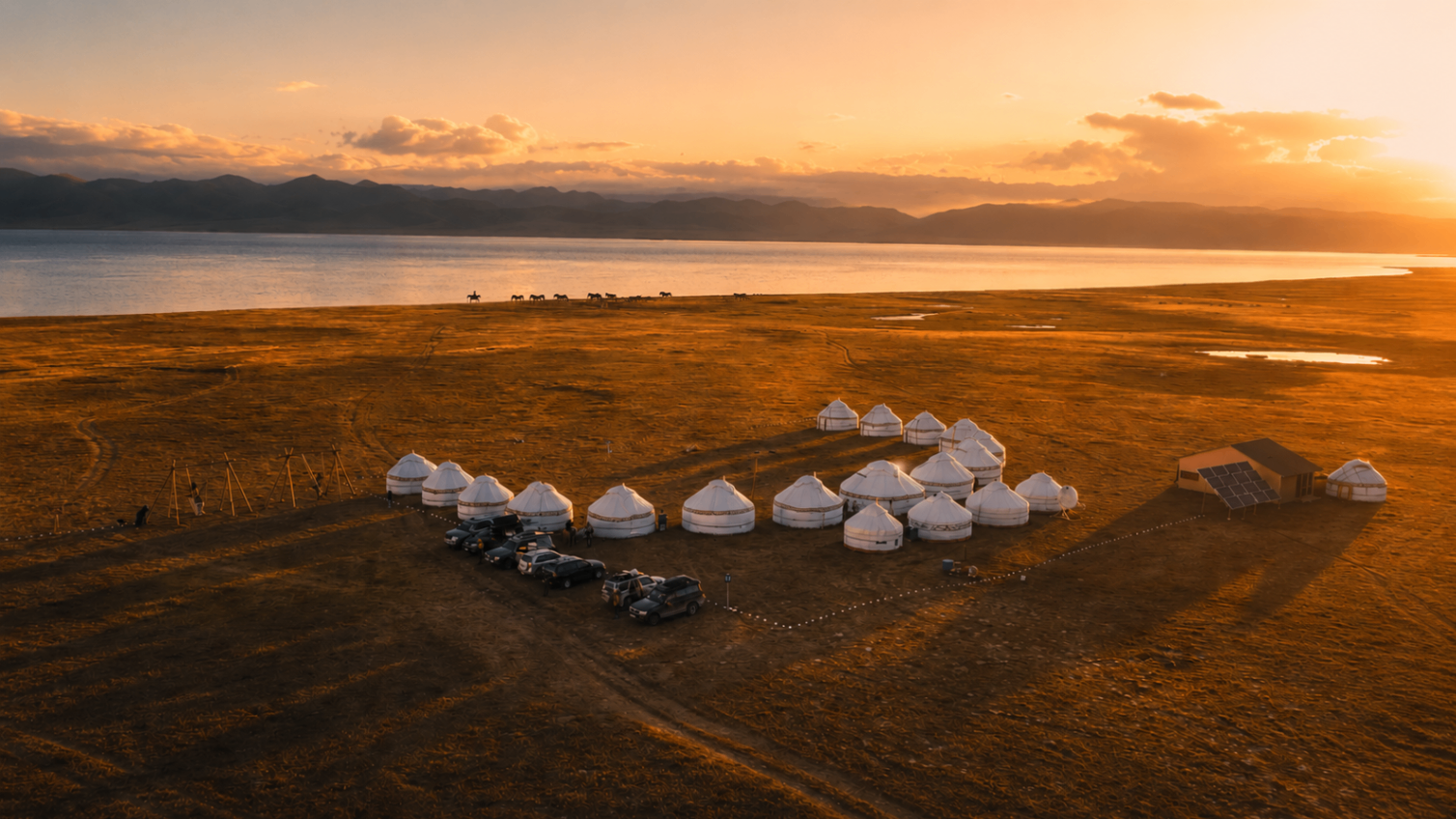
See allKyrgyzstan gives you space: alpine lakes, silent valleys, nights in a yurt under an absurd number of stars. Yet after a week in the Tien Shan, many of our guests start asking about the other half of the Silk Road story — the oasis cities the caravans were actually travelling to. Khiva and Bukhara are the most rewarding answer. Swap glaciers for the Kyzylkum desert, rock walls for mud-brick ramparts, summer pastures for bazaars. The contrast makes sense historically, too: for centuries nomads and settled oases traded with and depended on each other, so one trip covering both feels like a single, coherent narrative.
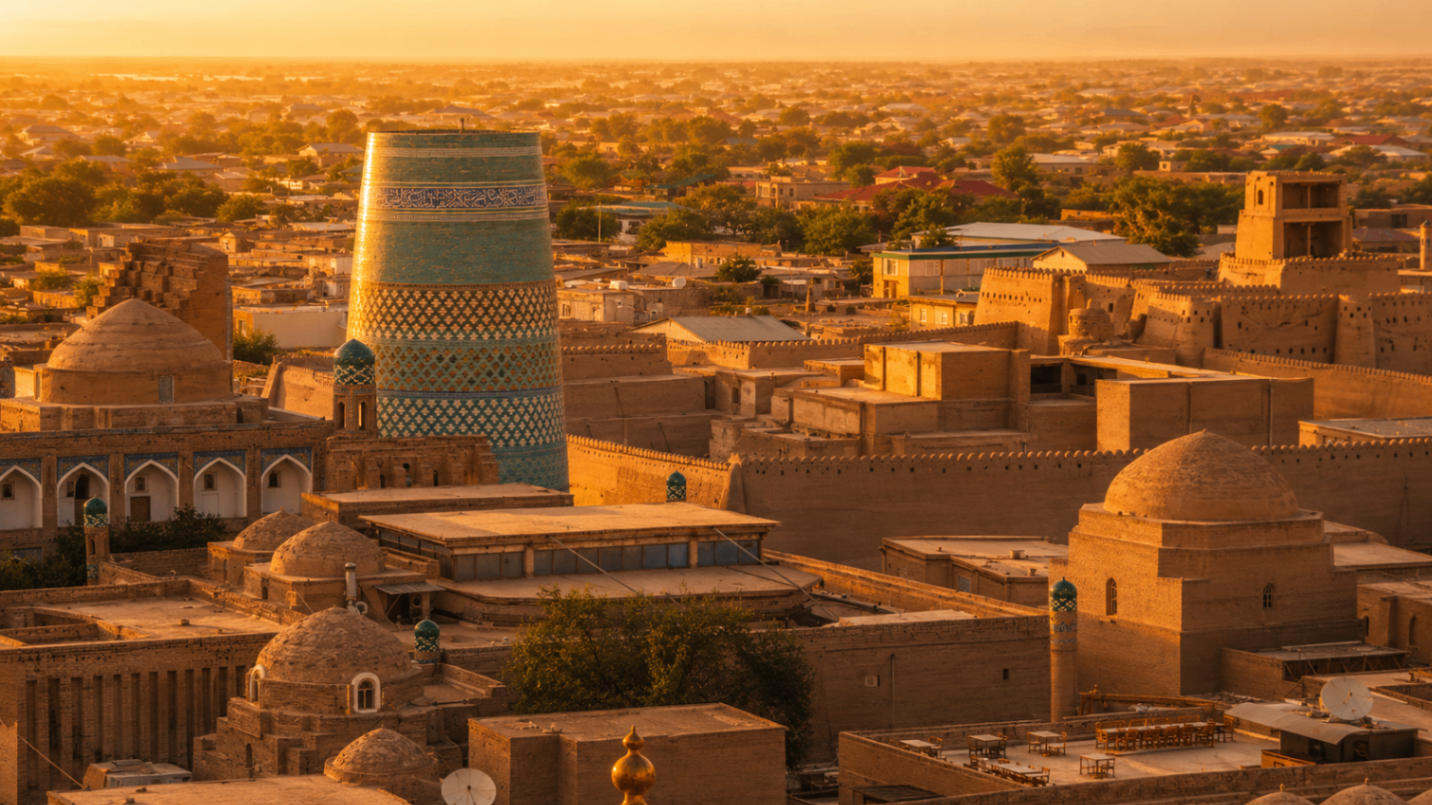
Itchan Kala, Khiva's inner town, was the first site in Uzbekistan to be inscribed on the UNESCO World Heritage List. Within its walls sit madrasas, minarets, palaces and mosques packed into a few walkable lanes: the stubby turquoise Kalta Minor, the slender Islam Khoja minaret, the Kunya Ark citadel and the Tash Hauli palace with its tiled harem courtyards. Our advice is to see Khiva twice — at dawn, before the day visitors arrive, and at sunset from the city walls, when the clay glows honey-gold.

Don't miss the Juma Mosque, a forest of carved wooden columns, some far older than the building itself. It is a natural opening to Khorezm's woodcarving tradition, which is still very much alive: in workshops inside Itchan Kala you can watch craftsmen shape doors and pillars, and commission a piece directly from the maker.
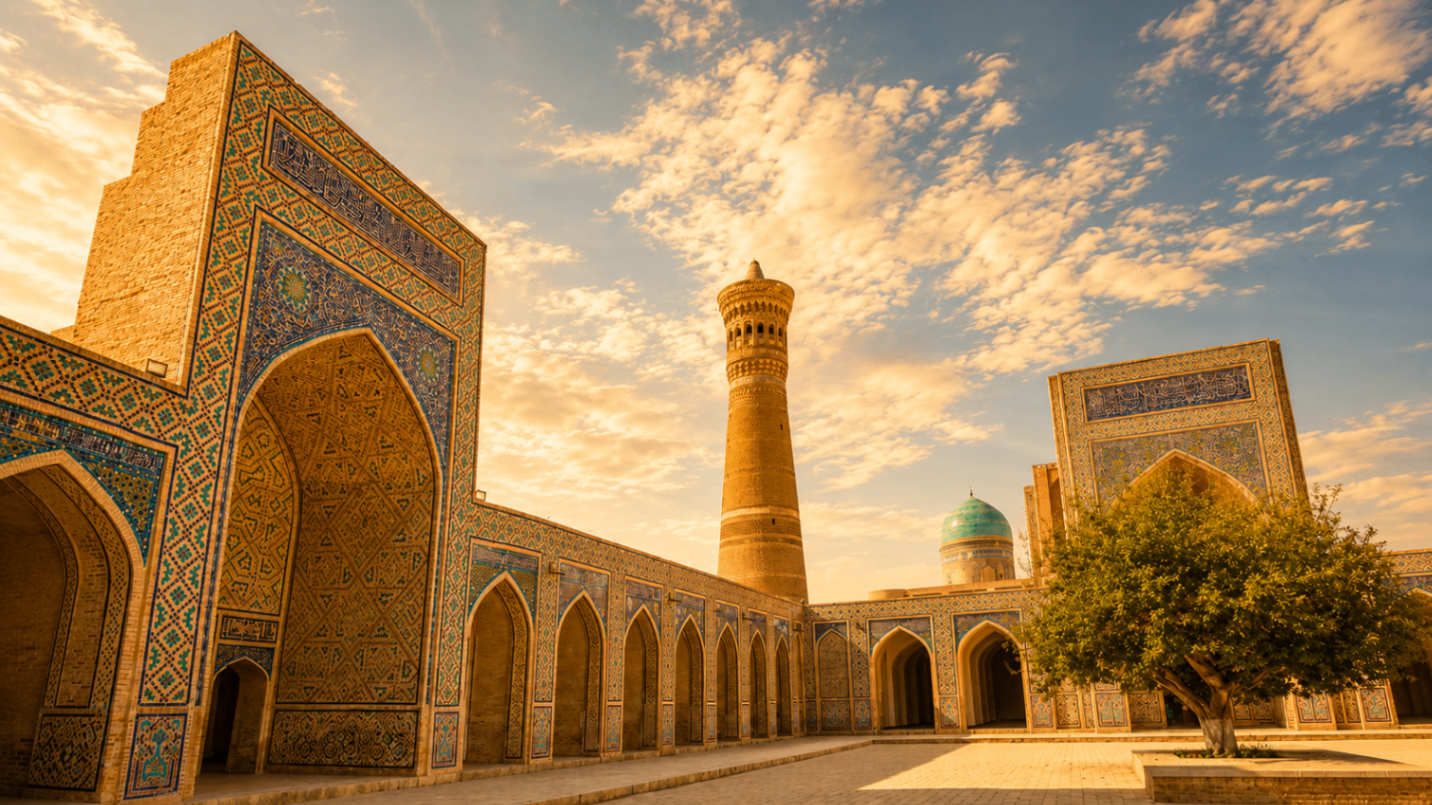
Where Khiva is compact and curated, Bukhara is a real, lived-in city. The Poi Kalyan ensemble and its great minaret, the trading domes that still function as markets, Lyabi Hauz pond shaded by old mulberry trees, the Ark fortress, the Samanid Mausoleum with brickwork often compared to lace, and tiny Chor Minor tucked into a residential quarter. Stay at least two or three nights in a boutique hotel within the old town so that evenings can be spent on foot.
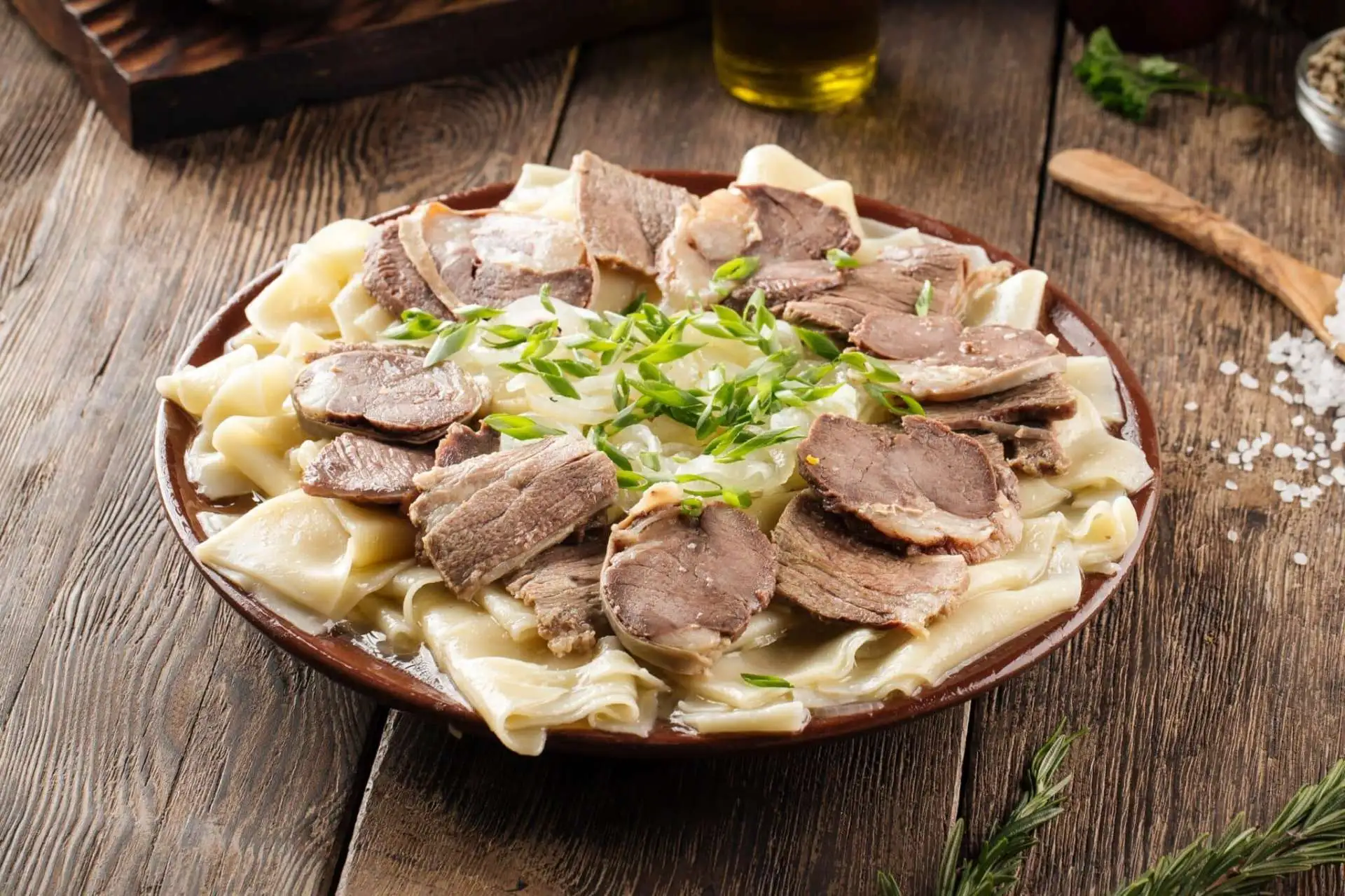
Bukhara is also a capital of craft — gold embroidery, suzani, copper chasing, blacksmithing. We arrange private workshop visits where the point is understanding how a piece is made, not just buying it, and for ceramics lovers a trip to the hereditary potters of Gijduvan. The food is every bit as memorable: plov cooked in a cauldron in front of you, Khiva's bright green dill noodles, dinners in the courtyards of old merchant houses. After Kyrgyz beshbarmak, it is a completely different taste of Central Asia.
The classic mistake is trying to do everything by road. We design the logistics so the long legs cost you as little energy as possible:
Plan five to seven days for the Uzbek leg: two nights in Khiva, two or three in Bukhara and, if you like, Samarkand, which we covered in our piece on pairing Samarkand with the Tien Shan. A ready-made foundation is our Greatness of the Timurid Empire tour, which slots neatly onto a mountain itinerary.
The sweet spot is Kyrgyzstan's mountains in late summer followed by Uzbekistan in September or October, once the desert heat eases. Spring 2027 is another excellent window for Khiva and Bukhara, though high lakes such as Son-Kul are still inaccessible in April, so a spring Kyrgyz leg works best around Issyk-Kul and the foothills. For a three-country trip, look at our Grand Central Asian Journey through Kazakhstan, Kyrgyzstan and Uzbekistan.
Every route like this is built around you: flights, private historian guides in each city, hotels inside the old towns and a pace that leaves time for tea in a madrasa courtyard. Share your dates and interests with the xtravel team, and we will propose a version where the mountains and the desert cities complement each other rather than compete for your time.
Want to see it with your own eyes?
We'll build a route around your dates, pace and budget — guide, transfers and stays included. We reply within a day.
Popular tours
You may also like