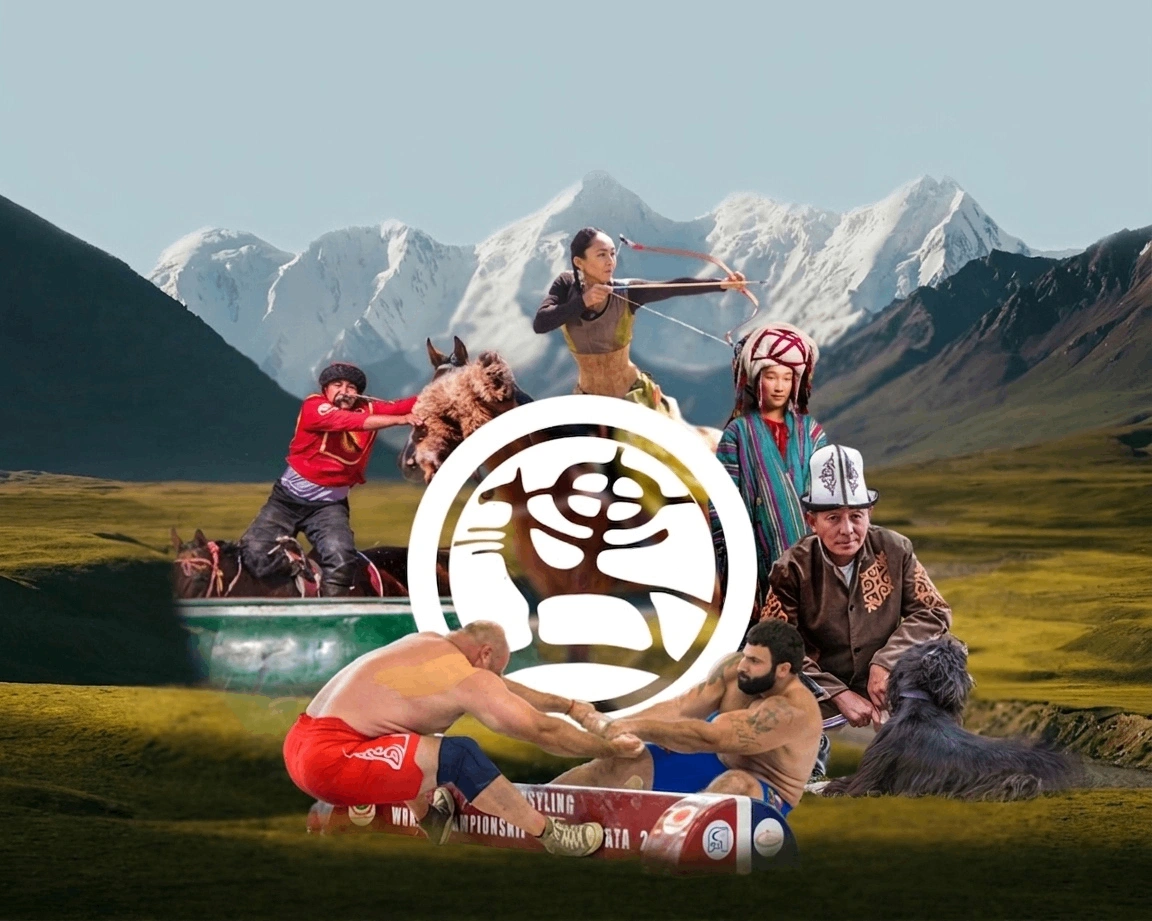
The history of the yurt — a symbol of nomadic culture in Central Asia. How felt and wood became the foundation of nomadic dwellings and why the yurt remains a living heritage of Kyrgyzstan today.
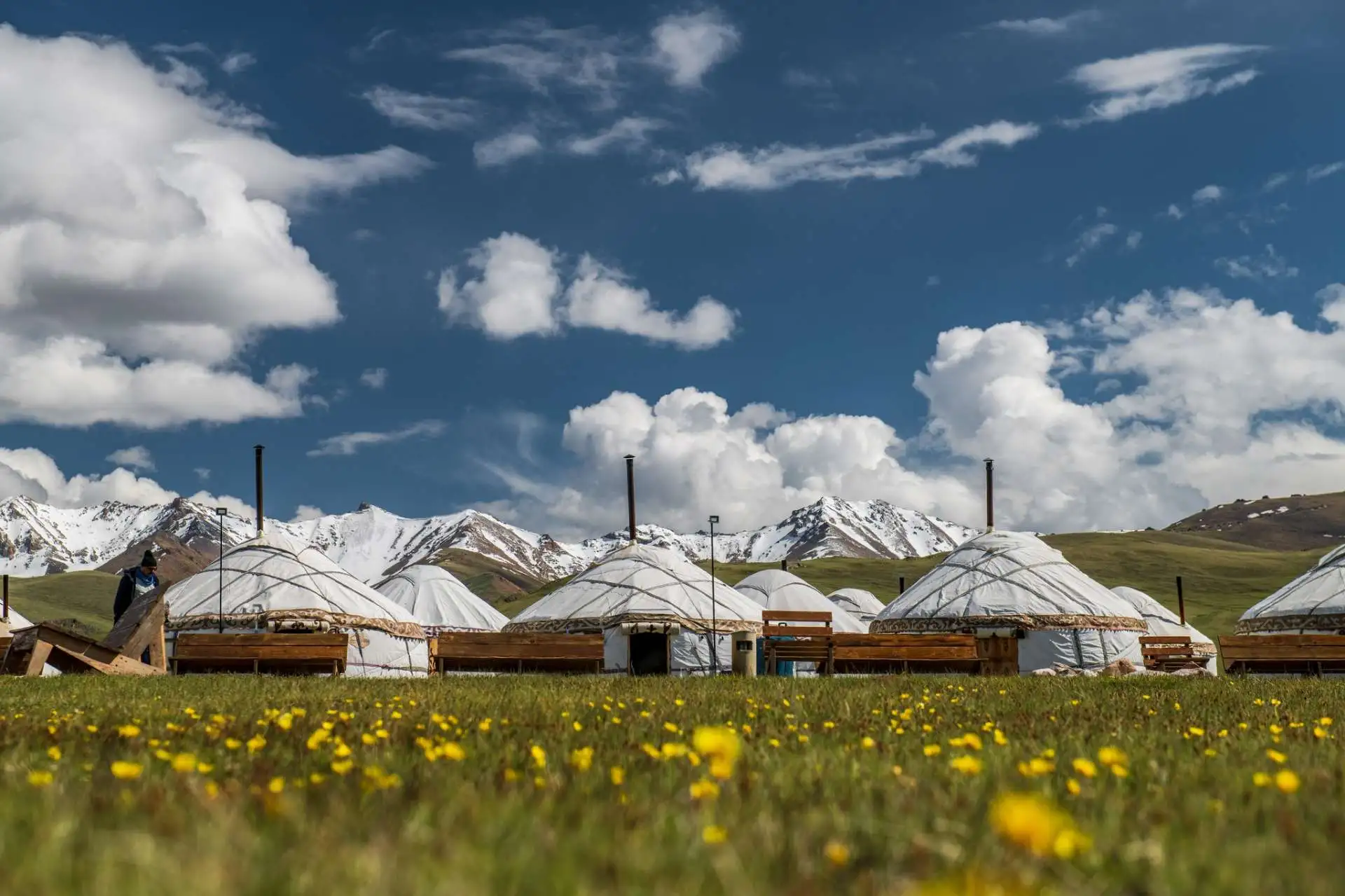
Our tours
See allWhen people speak about the nomads of Central Asia, the first image that often comes to mind is the yurt.
Not a palace, not a fortress, and not a temple — but a mobile, carefully designed, and remarkably harmonious dwelling created for a life in constant motion.
The history of the yurt is a history of survival, freedom, and a deep understanding of nature. It was not born as an architectural experiment, but as a response to the harsh conditions of the steppes and mountains.
The earliest prototypes of the yurt emerged among ancient nomadic peoples of Central Asia thousands of years ago.
Constant migration required a home that could be quickly dismantled, transported, and reassembled — without losing warmth or comfort.
Thus, the yurt was created — a circular wooden structure covered with felt.
It had no corners, which helped retain heat and resist strong winds, and its shape was perfectly suited to life in the steppes and mountain valleys.
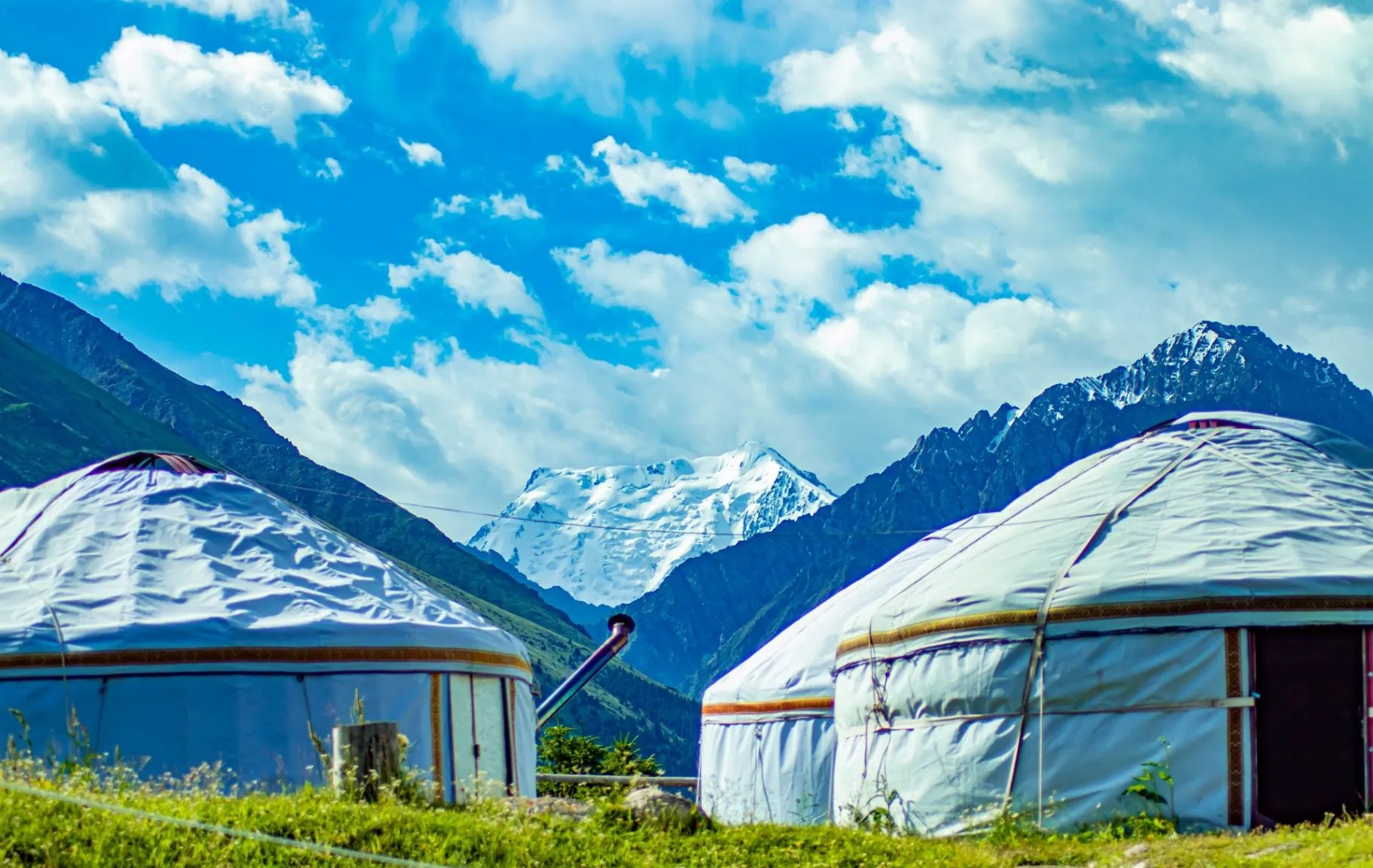
Felt became a key material in the history of the yurt for a reason.
It was made from sheep’s wool — a resource that was always available to nomads.
Felt:
retained warmth in winter;
protected from heat in summer;
“breathed,” regulating humidity inside the yurt;
was easy to repair and replace.
It was felt that made the yurt an ideal home for the nomadic lifestyle of Central Asia and the territory of modern Kyrgyzstan.
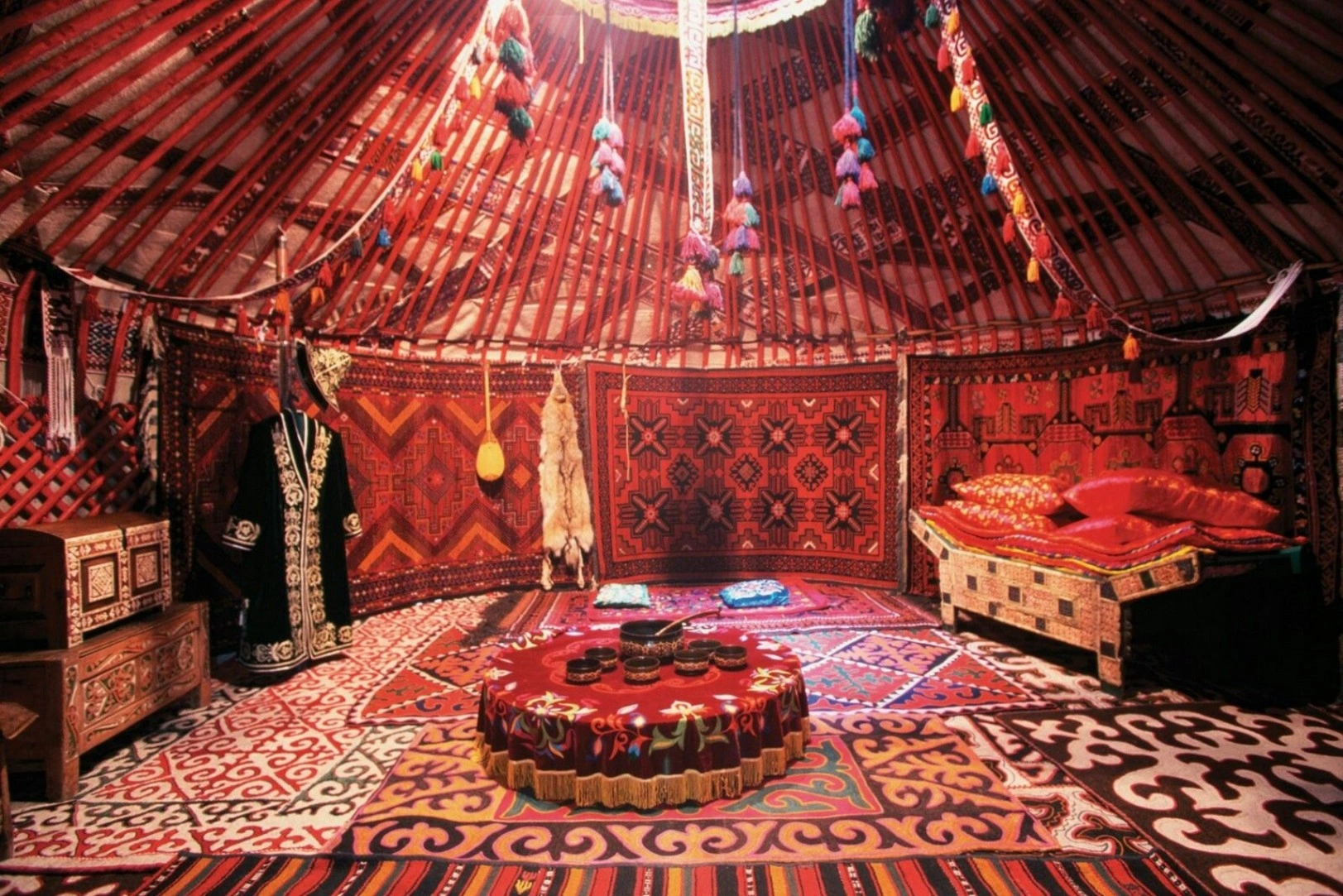
The wooden frame of the yurt is not just a technical structure, but a reflection of nomadic philosophy.
Every element had its place and meaning: the walls, the dome, and the central circle — the tunduk.
In the nomadic culture of Kyrgyzstan, the tunduk became a symbol of home, lineage, and continuity.
It is no coincidence that its image appears on the national flag today — a reminder that the yurt was not merely a dwelling, but the center of life.
The yurt never existed separately from the person.
It was part of a nomadic world where everything was subordinated to movement, nature, and seasonal rhythms.
For the nomads of Central Asia, the yurt meant:
a home that always moves with you;
protection in harsh climatic conditions;
a space for family, traditions, and rituals.
That is why the history of the yurt is also the history of the nomads of Kyrgyzstan and the entire region.
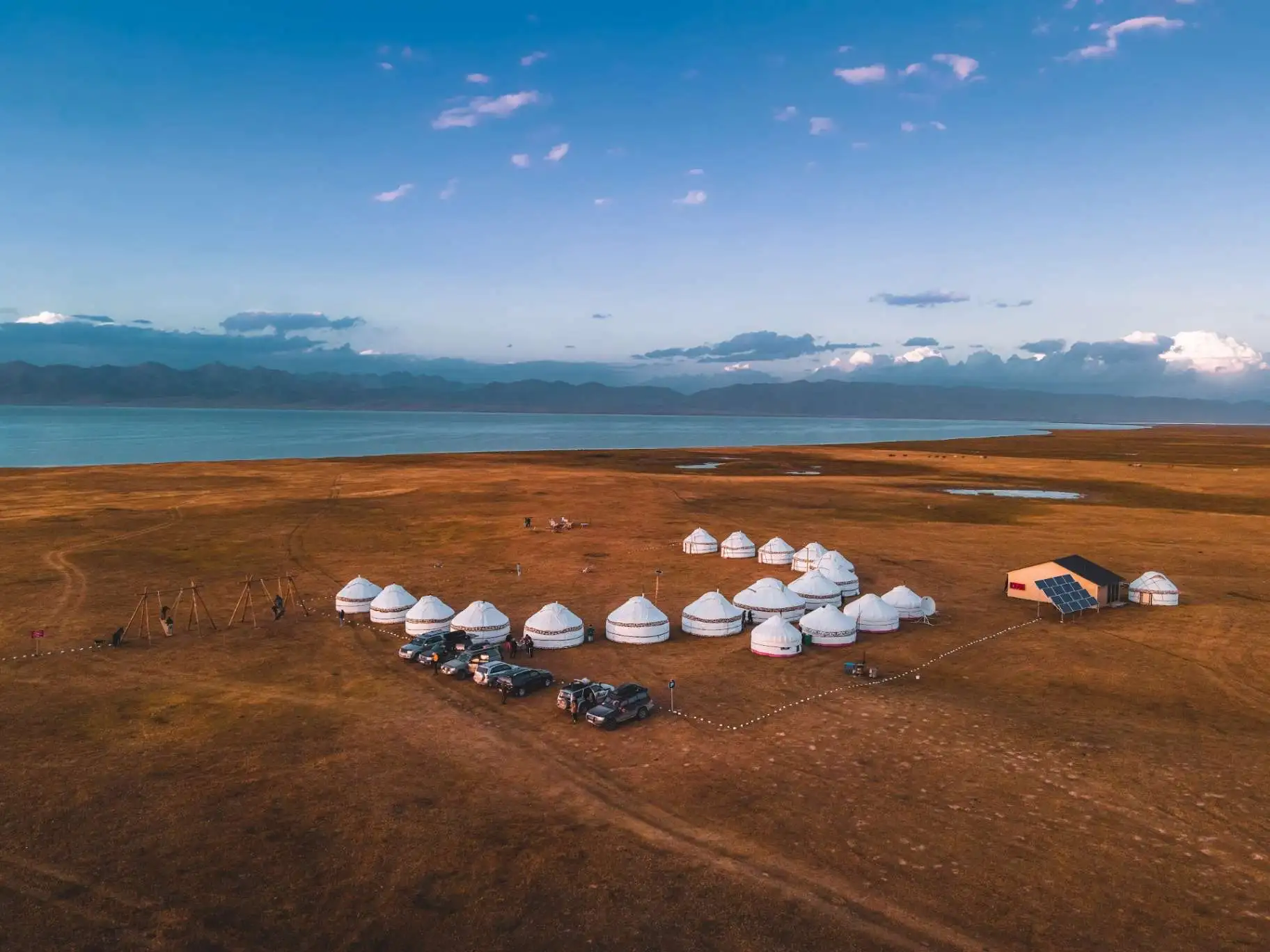
Despite the development of cities and modern technologies, the yurt has not disappeared.
In Kyrgyzstan, it is still used today on high-altitude pastures, during seasonal migrations, and at traditional festivals.
For travelers, the yurt has become a symbol of genuine connection with nomadic culture.
Spending a night in a yurt is not an attraction — it is a way to touch a lifestyle that shaped Central Asia for centuries.
In journeys across Kyrgyzstan, XTRAVEL.KG presents the yurt not as a decoration, but as a living cultural heritage.
We include yurt camps in our routes so that guests understand their meaning and context.
Through the yurt, travelers gain a deeper understanding of:
the nomadic culture of Central Asia;
the connection between humans and nature;
the philosophy of simplicity and functionality.
The yurt is more than a dwelling made of felt and wood.
It is the result of centuries of nomadic experience, adaptation to nature, and respect for the surrounding world.
The history of the first yurt is the history of Central Asia told without words.
And if you want to see it not in pictures, but in real life, XTRAVEL.KG will help you experience it thoughtfully and deeply.
Want to see it with your own eyes?
We'll build a route around your dates, pace and budget — guide, transfers and stays included. We reply within a day.
Popular tours
You may also like